Muuto at 3daysofdesign 2026: When Scandinavian Design Becomes a Space for Dialogue
29 September 2026
At 3daysofdesign 2026, Muuto celebrates 20 years by looking ahead, exploring how Scandinavian design can create dialogue, reflection and community.
There is an increasing feeling that design has entered a new era. For many decades, design was focused on innovation, iconic designs and the launch of numerous products; however, now there seems to be a shift to something intangible, which might be even more important than the former: context. What is considered to be the most significant design is not necessarily what introduces something new but what creates dialogue and community.
“The role of design is not simply to produce objects, but to shape the relationships between people, places and the ways we choose to live.”
This broader cultural shift was particularly evident during 3daysofdesign in Copenhagen. Across the city, exhibitions increasingly moved beyond the logic of the showroom, becoming spaces for reflection where furniture, architecture, publishing and public discourse intertwined. Rather than simply presenting products, many brands asked a more fundamental question: what role should design play within contemporary culture? Among the exhibitions that best embodied this transition was Muuto, whose participation transformed the celebration of its twentieth anniversary into a reflection on the future of Scandinavian design itself.
Founded in 2006, Muuto has always embraced the idea that Scandinavian design is not a style to preserve but a language to continually reinterpret. Even its name derives from the Finnish word muutos, meaning new perspective, suggesting that change, curiosity and evolution are part of its DNA. Instead of looking backwards through an archive of past successes, the exhibition “20 Years of New Perspectives” focused on the next chapter. Visitors entering the brand’s Copenhagen headquarters discovered not only finished products, but sketches, prototypes, material explorations and works in progress that revealed the often invisible journey behind every object.
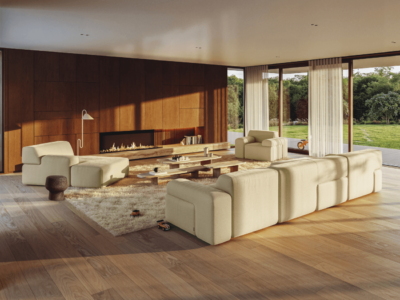
New collections, including Coltre Sofa by Studiopepe, Brink Chair by Thomas Bentzen and Contra Floor Lamp by Jamie Wolfond, were presented as the outcome of an ongoing dialogue between designers, materials and everyday life, rather than as isolated launches competing for attention.
Yet the most interesting innovation presented by Muuto this year was arguably not a new product at all. It was a shift in emphasis—from designing objects to designing the conditions in which ideas can circulate.
Perhaps the most memorable part of Muuto’s presence, however, contained almost no furniture at all. Presented at Other Circle, The Library became one of the festival’s most thoughtful spaces. Rather than functioning as a conventional installation, it invited visitors to slow down, browse books, read essays, sit together and engage in spontaneous conversations.
“Perhaps the future of Scandinavian design is not about creating more objects, but about creating better conversations around them.”
In many ways, the installation reflected a broader transformation taking place across the creative industries. Increasingly, brands are expected not only to manufacture products, but also to produce culture. Publishing books, organising talks, commissioning research and building communities have become as important as designing the next chair or lamp. Muuto embraced this expanded role naturally, presenting itself less as a furniture company than as a cultural platform.
This same philosophy extended to the limited-edition works unveiled during the festival. The reflective Inner View Object by Lise Vester explored how light alters perception, while Spacon‘s sculptural Close to Heart chair balanced industrial precision with emotional symbolism. Neither object sought to impress through excess or spectacle. Instead, both invited slower observation, rewarding attention rather than demanding it. Even here, collectibility became almost secondary.
Walking through Muuto’s exhibition, one impression remained particularly strong. The company seemed less interested in asking “What’s new?” than in asking “What deserves our attention?” It is a subtle distinction, but perhaps an increasingly important one.
At a time when digital platforms encourage constant scrolling and new products appear faster than we can truly experience them, design may need to reclaim another responsibility: creating the conditions for reflection. Not every exhibition needs to overwhelm with novelty. Sometimes it is enough to encourage us to look more carefully, think more slowly and engage more deeply.
From this perspective, Muuto’s involvement in 3daysofdesign 2026 was not merely about commemorating an anniversary. Rather, Muuto suggested a new approach to the definition of a modern design brand; not just one that manufactures furniture, but one that helps to foster dialogue.
Is this the true evolution of Scandinavian design? Not an aesthetic transformation, but a cultural one—in which the merit of an object does not lie in its craftsmanship alone, but in the dialogue that it fosters.