

Discover our e-shop and access a digital catalogue of over 40.000 design products.
Go to shopFrom Inspiration to installation. Discover Mohd Interior Design Studio
Discover our e-shop and access a digital catalogue of over 40.000 design products.
Go to shop11 September 2026
Behind the design of a wall sconce or a table lamp lies a single idea of light — one that, across contract and hospitality spaces, changes purpose without ever losing its character. The story of DCW éditions unfolds across bedrooms, lobbies, dining rooms and offices, moving between twentieth-century heritage and contemporary collections.
Our first impression of a hospitality space forms in a split second: the exact moment when, crossing the threshold, the chaos of modern life — often frenetic, seemingly unstoppable — gives way to a sense of composure and shelter. More than furniture, it is light that guides this transition. Hospitality design isn’t about filling a floor plan or chasing a single hero piece — it’s about orchestrating a genuine repertoire of deliberate gestures, and their combination is what shapes the authentic atmosphere of a welcoming space.
DCW éditions‘ own repertoire finds its deeper coherence within this syntax. Eight families, eight distinct characters, spanning historic reissues and contemporary designs, share not a single formal language but a common attitude: each meets a specific need with a design that engages the surrounding architecture on tiptoe.
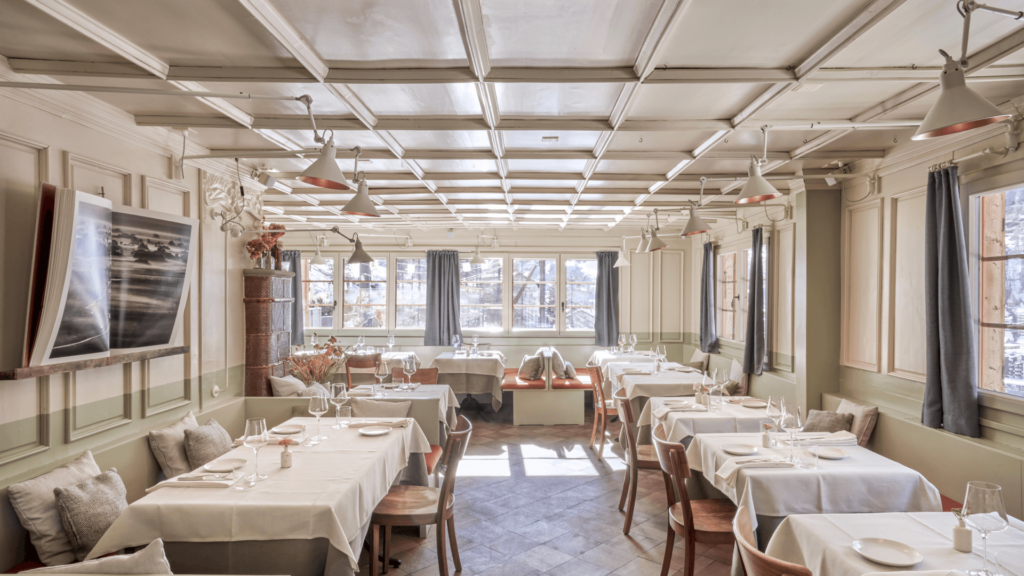
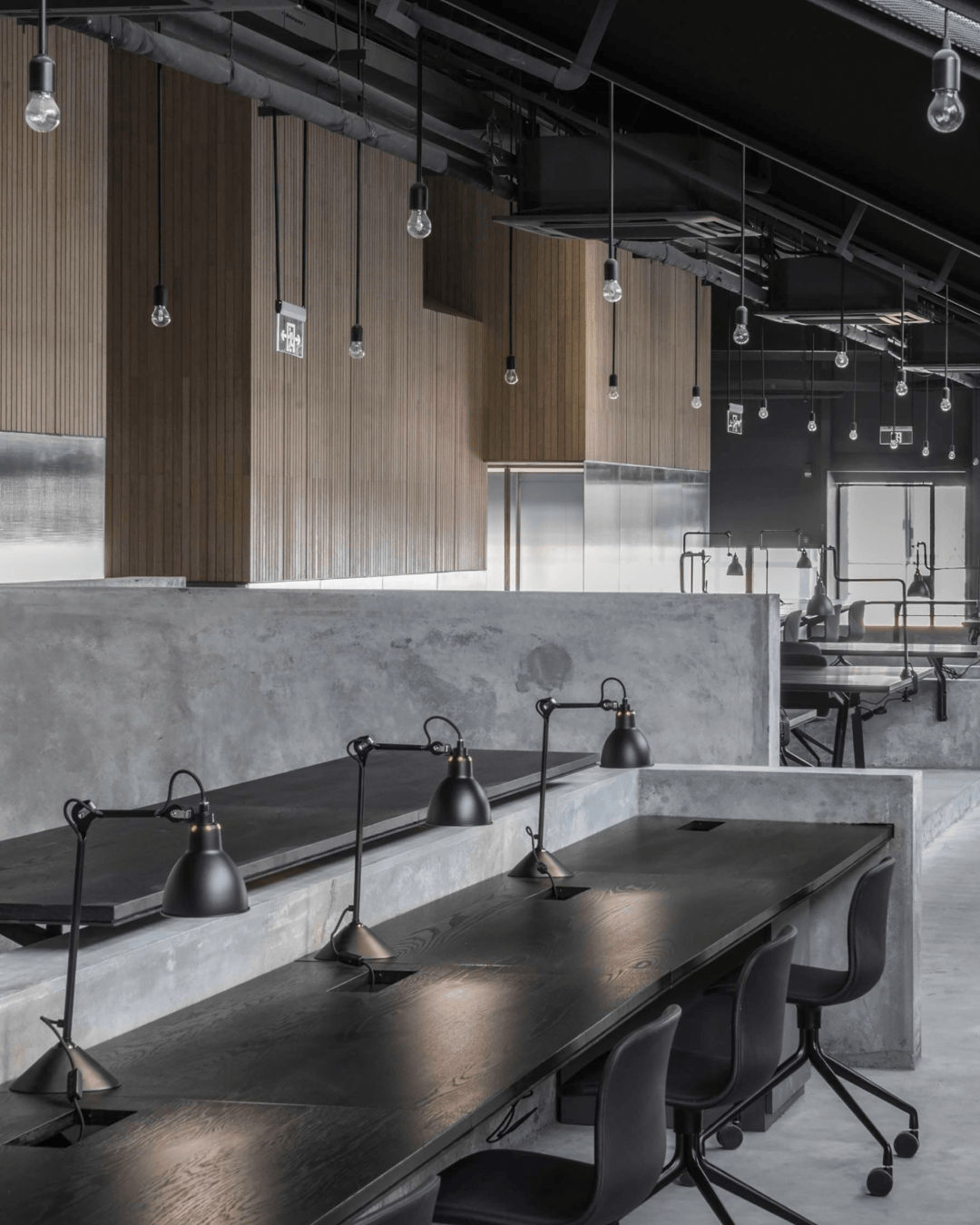
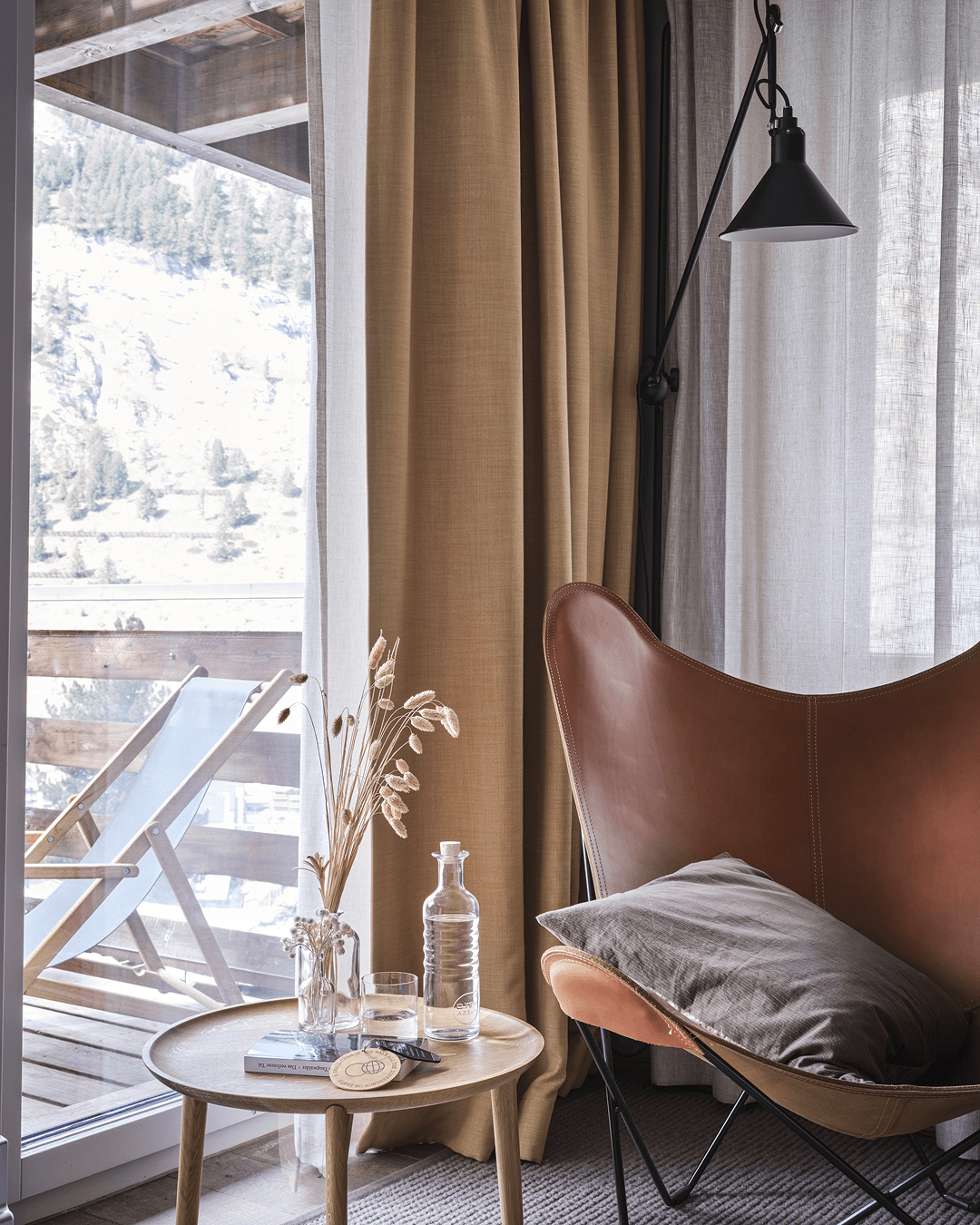
The story begins at the most intimate scale, in the relationship between light and the individual. Lampe Gras stands as its manifesto: conceived in 1921 by Bernard-Albin Gras, its mechanism — free of screws and welds — was so pure it won over Le Corbusier himself, who worked it into his own studies and projects. Transplanted into contract settings, the lamp retains its utilitarian calling: set on a suite’s writing desk or standing on the floor beside an armchair, its articulated arm bends to a simple hand gesture, delivering task light that loses none of the appeal of pure functionalism.
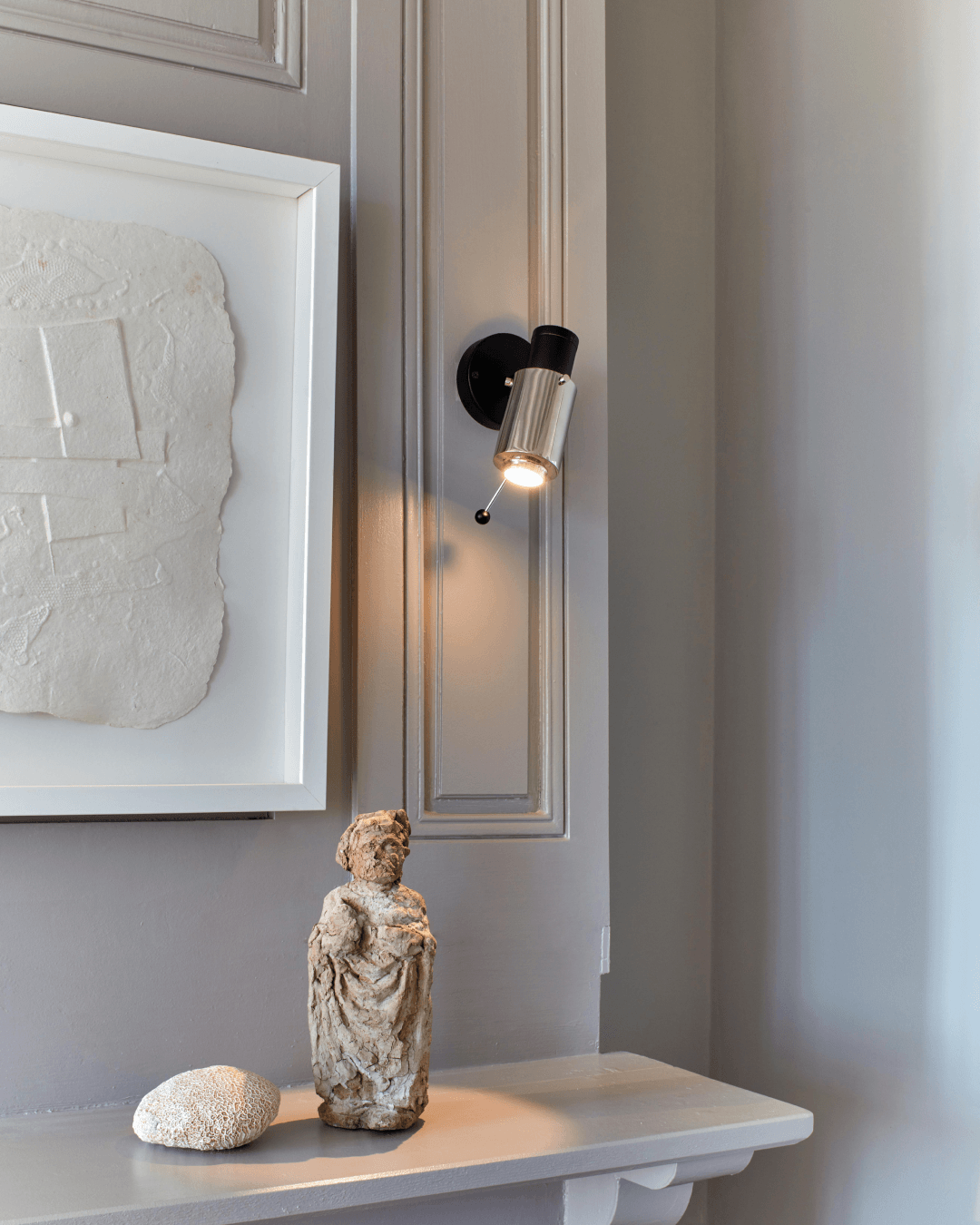
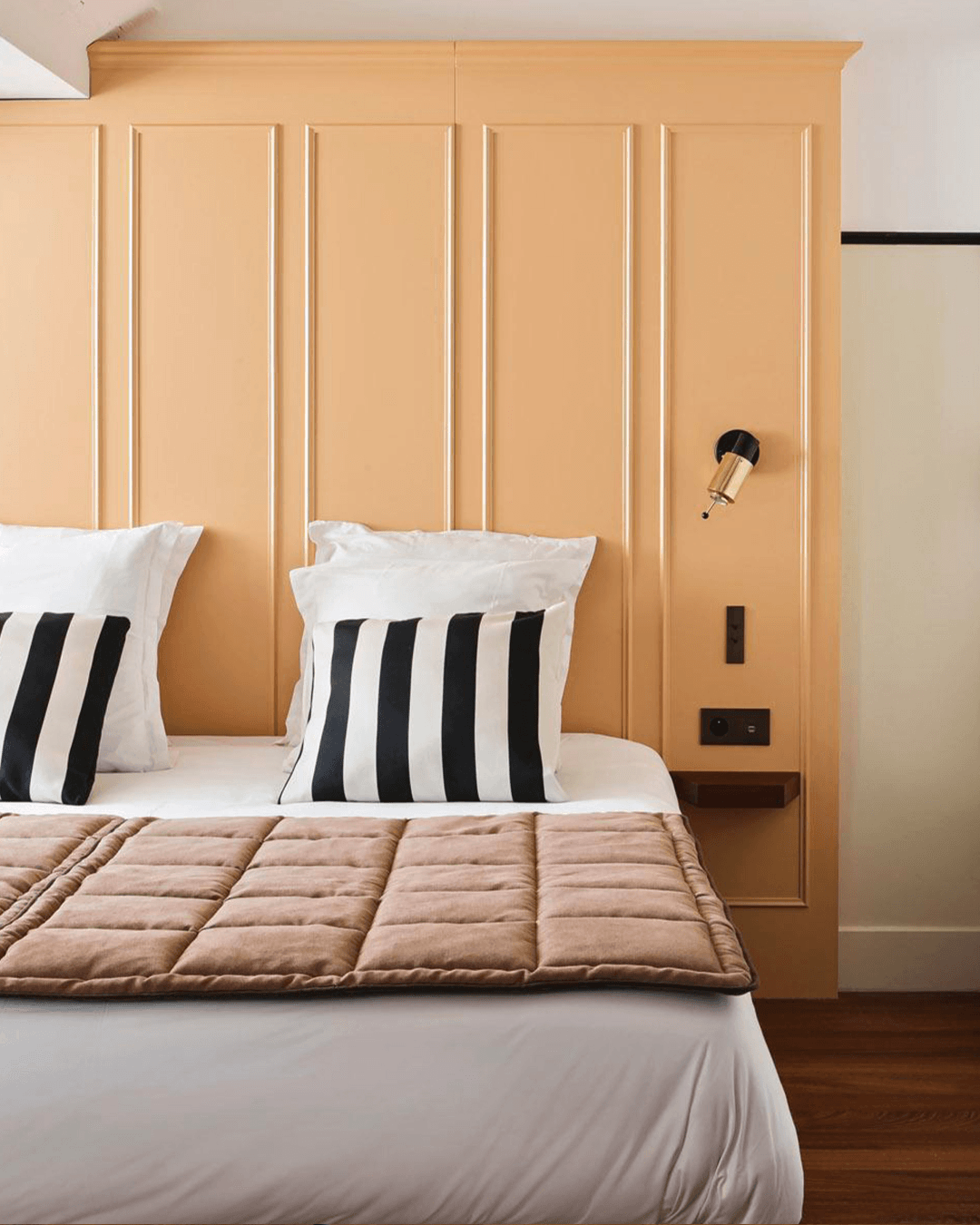
This same rigour evolves into Biny, designed by Jacques Biny in the 1950s. Far from an imposing presence, the Biny Spot is an optical instrument of absolute precision — an essential form mounted on a ball joint, built for a single purpose: directing the beam exactly where it’s needed, without spill or glare. Used as a reading light on either side of a hotel bed, its intent is clear: to let you focus on a page by isolating your own half of the room, before melting back — in both colour and form — into the wall behind it.
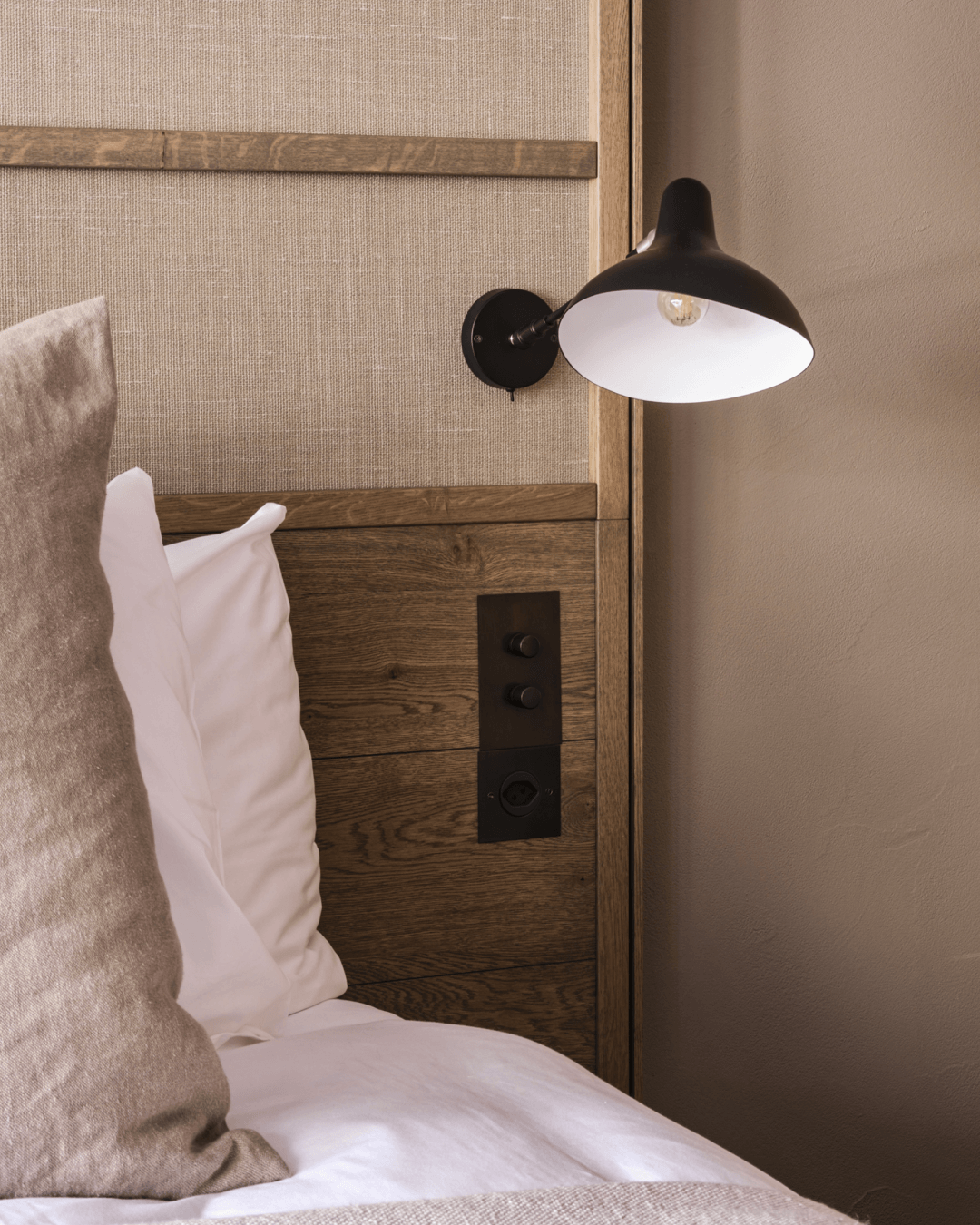
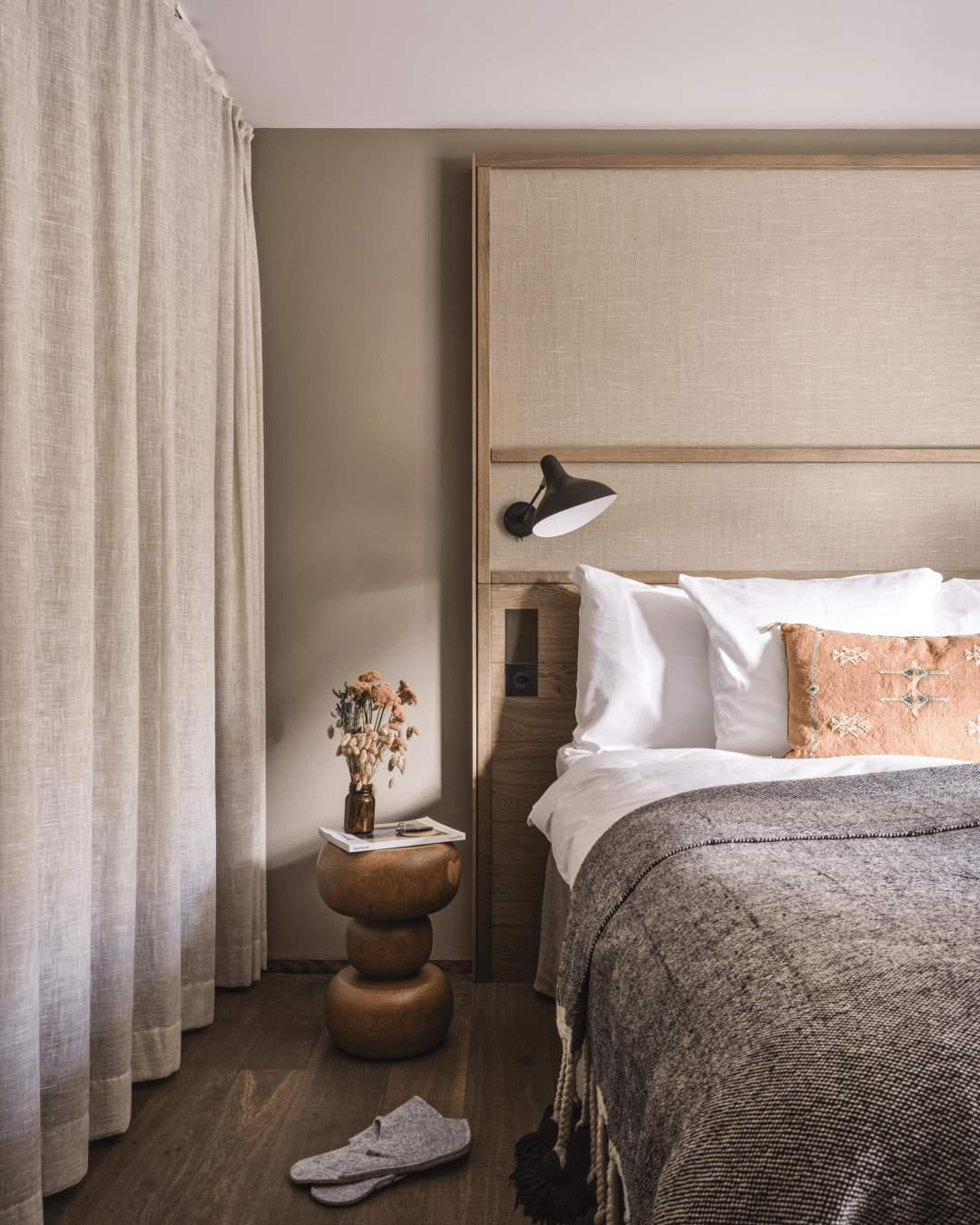
Where Gras and Biny are governed by pure function, Mantis adds a sculptural dimension. Designed in 1951 by Bernard Schottlander, a sculptor drawn to the mobiles of Alexander Calder, this wall lamp is an exercise in balance. Its slender stem and asymmetrical aluminium reflector appear to defy gravity. In a reading corner or a lobby, Mantis does more than illuminate — it hovers, sketching a light, airy counterpoint across the room.
Zoom out to the scale of architecture, and light becomes a way of measuring volume and defining materiality.
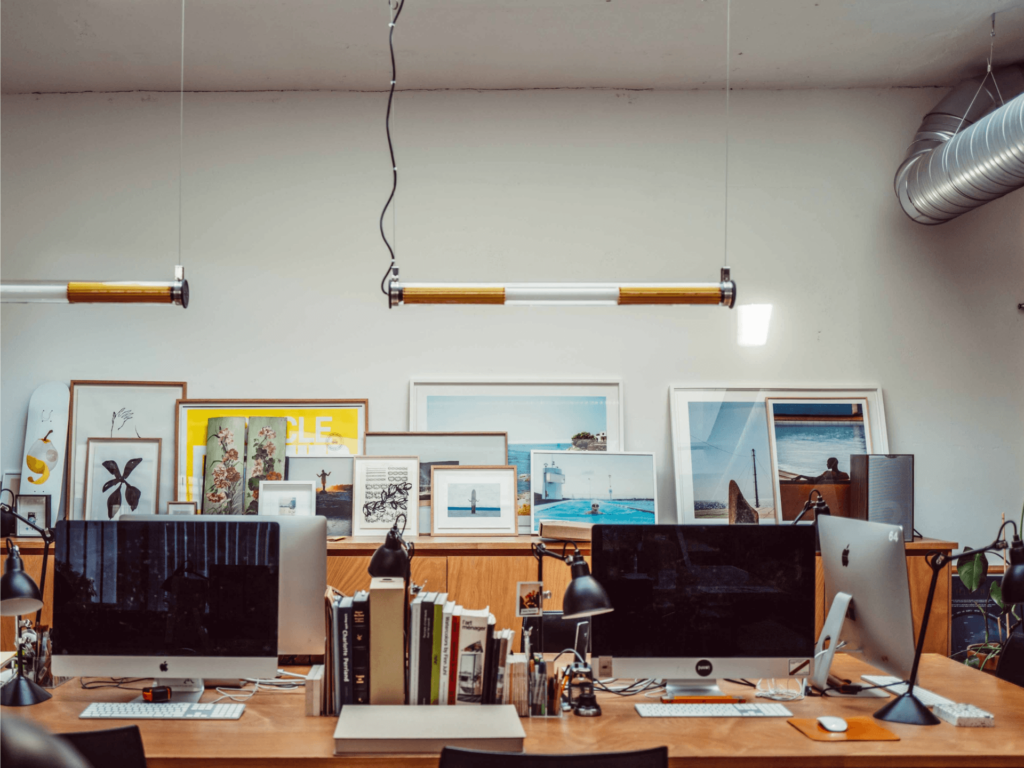
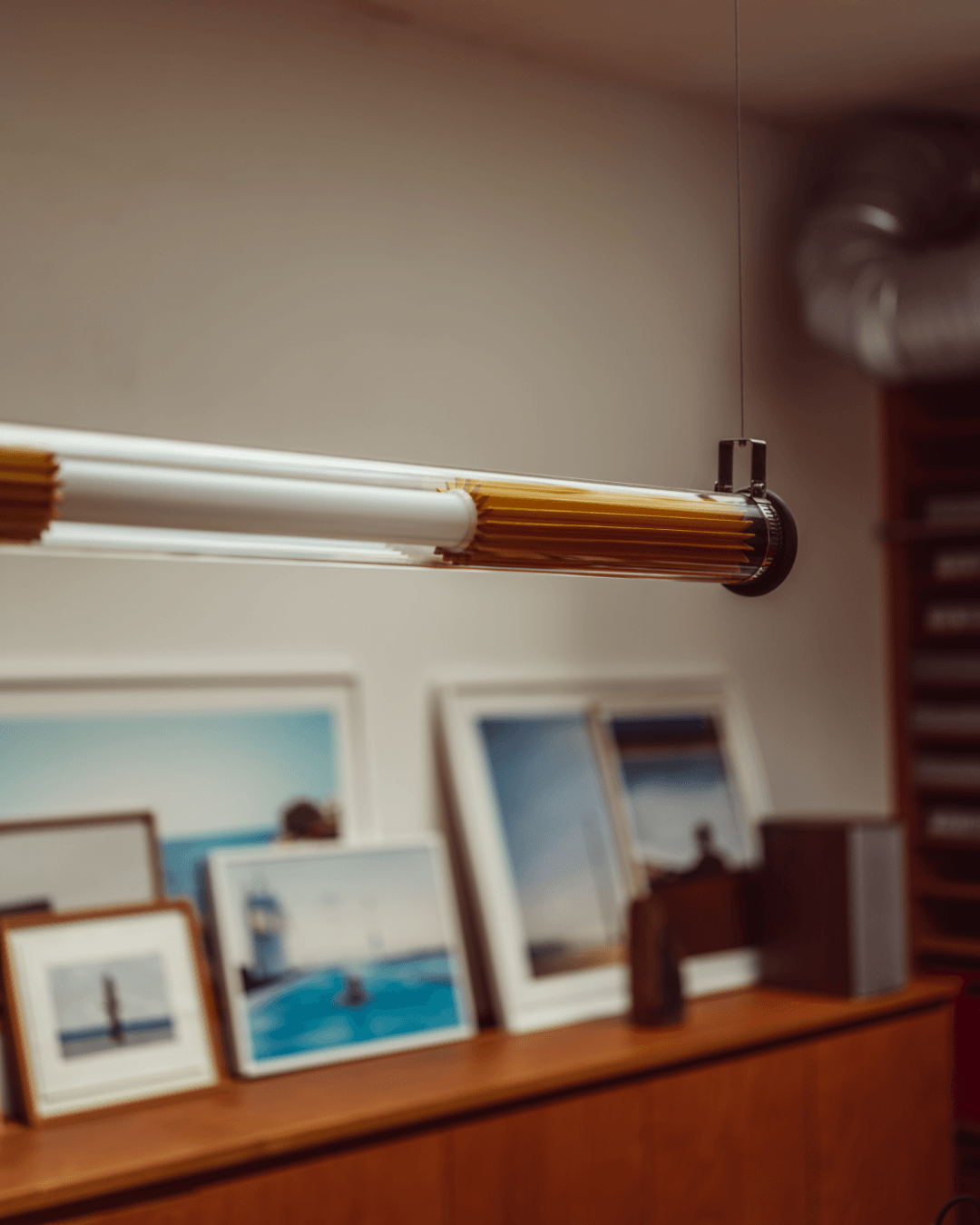
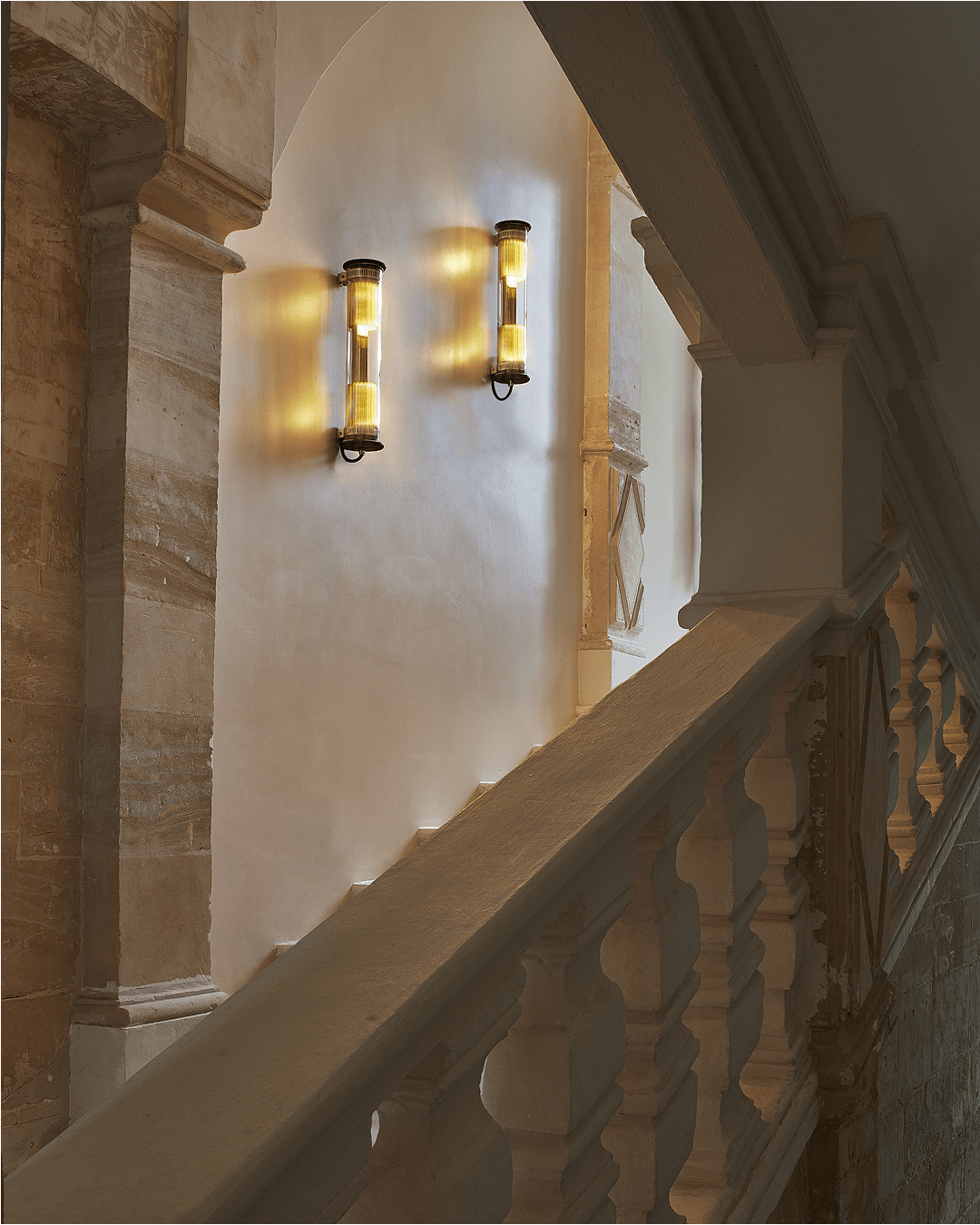
In The Tube, designed by architect Dominique Perrault and designer Gaëlle Lauriot-Prévost, speaks an almost industrial language: cylinders of borosilicate glass enclosing metal mesh, wall- or ceiling-mounted. Rather than distributing a neutral light, they mark out an architectural rhythm along corridors and thresholds, casting a soft glow that tempers the severity of their own design.
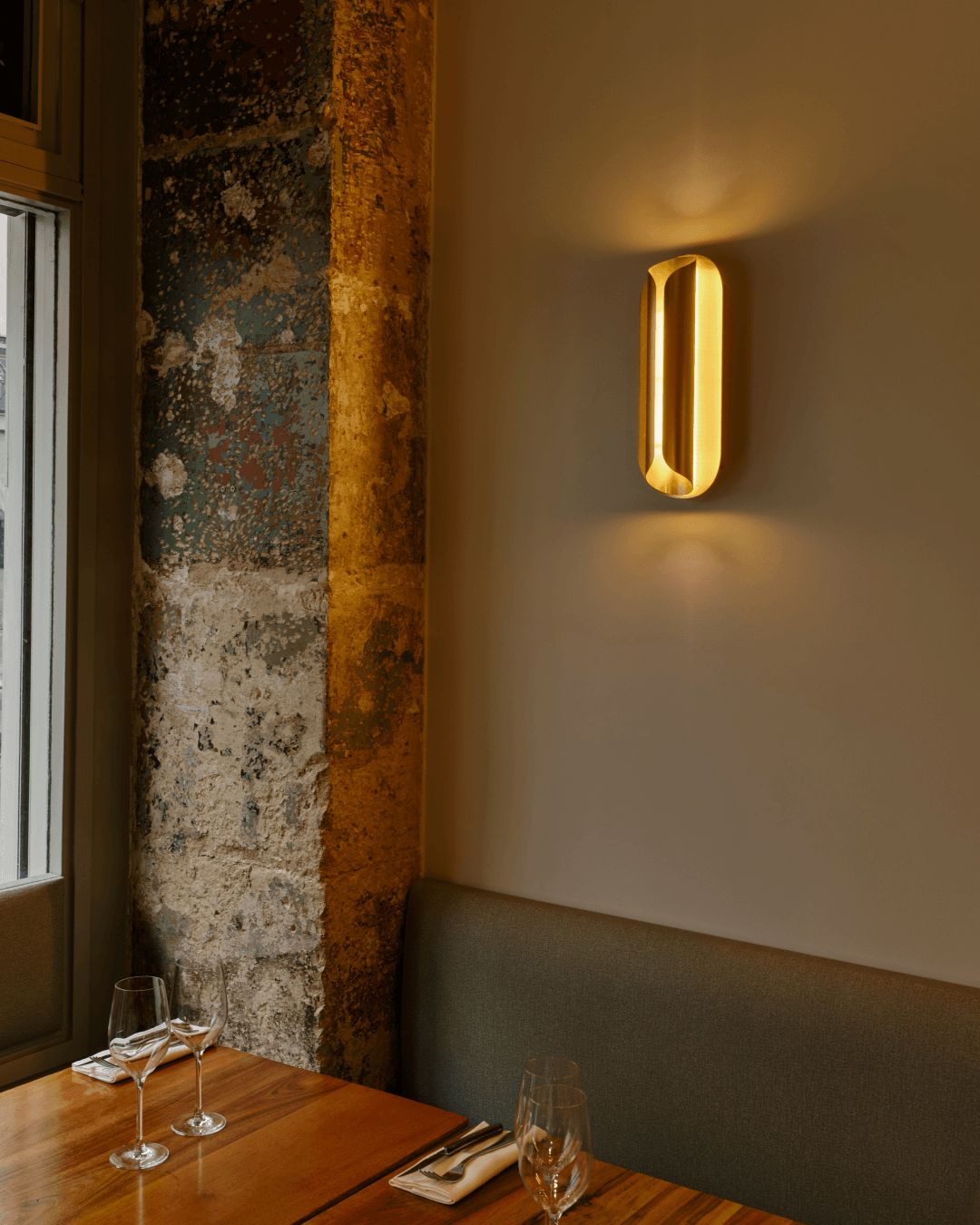
Also wall-mounted, Rosalie — by Julie Fuillet & Emeric Thiénot — takes a different approach, playing with fold and shadow. Made of anodised aluminium, its shape recalls a detail lifted from tailoring. Light slips between its ripples, casting soft cones of light upward and downward. More than a fixture, it’s a textural intervention that gives depth back to otherwise flat walls, turning vertical surfaces into canvases for shadow to play across.
At the centre of a room, though, or suspended above a restaurant table, light becomes pure atmosphere. In The Sun, again by Perrault and Lauriot-Prévost, was conceived as a tribute to the Sun King for the restoration of the Pavillon Dufour at the Palace of Versailles. Its pleated metal mesh filters the light source, breaking it into a kaleidoscope of gold or silver glints. Whether hung from the ceiling or set on a table, its light doesn’t sharply define edges — instead it warms the room, wrapping whoever sits beneath it in a bubble of intimacy.
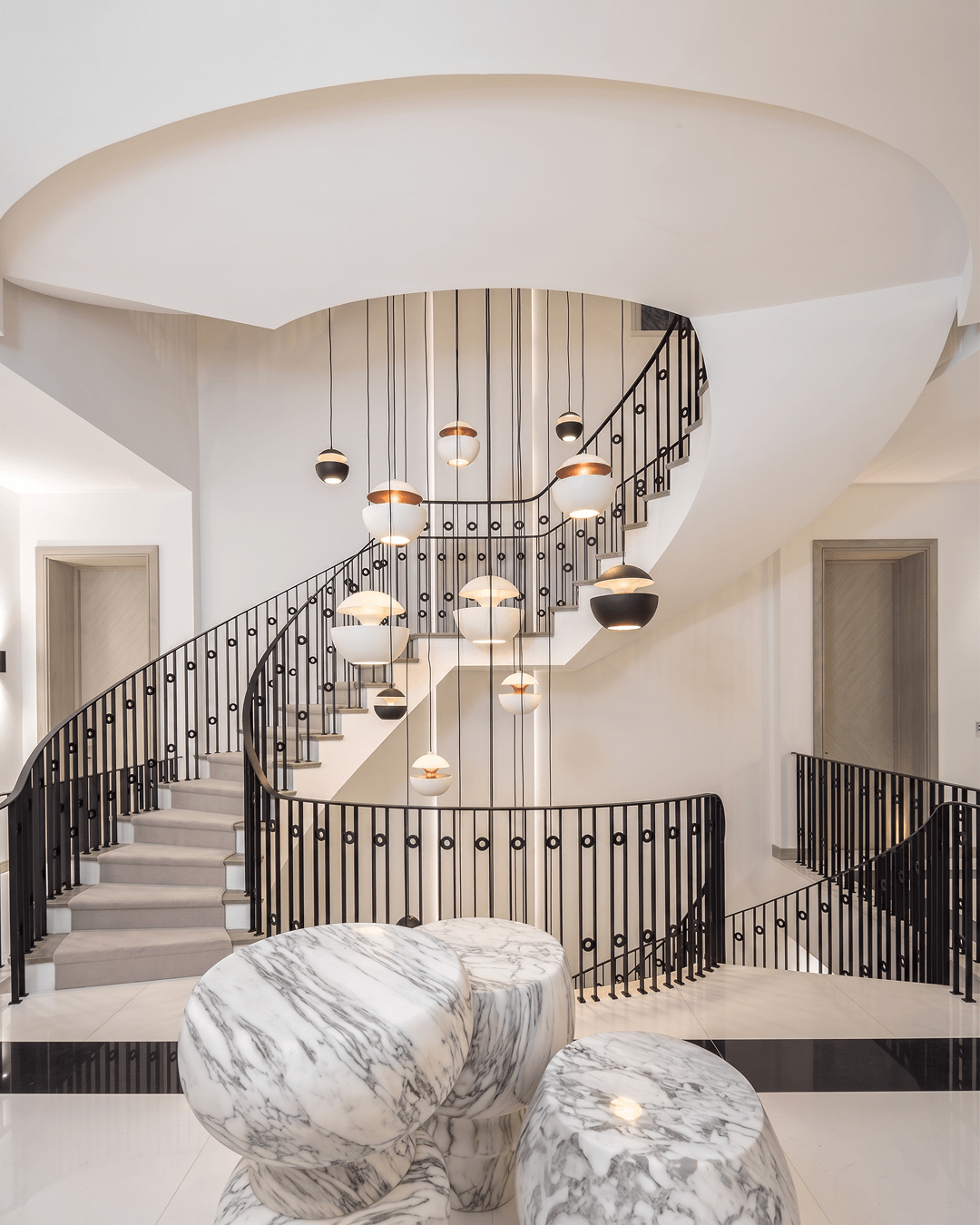
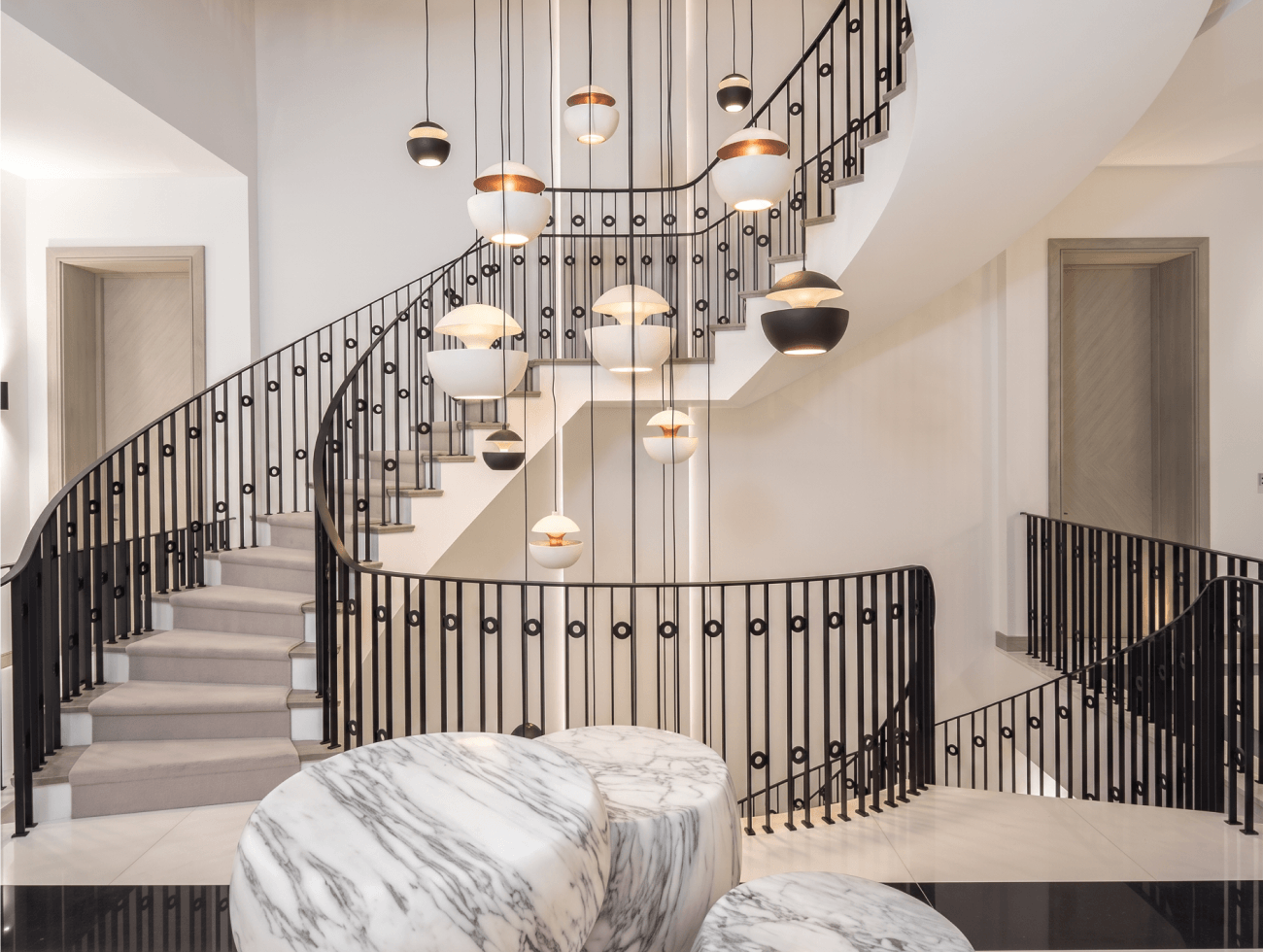
Here Comes the Sun, designed by Bertrand Balas in 1970, shares that same visual poetry. Inspired by sunsets over the Garonne in Toulouse, the lamp looks like a sphere, magically sliced open. Switched on, light slips inside its white or copper shell, turning the pendant into a glowing orb. Grouped in clusters or arranged in strict rows across the open volume of a lobby, it can move from a single luminous accent to a full scenographic event, all while keeping the softness of its glow intact.
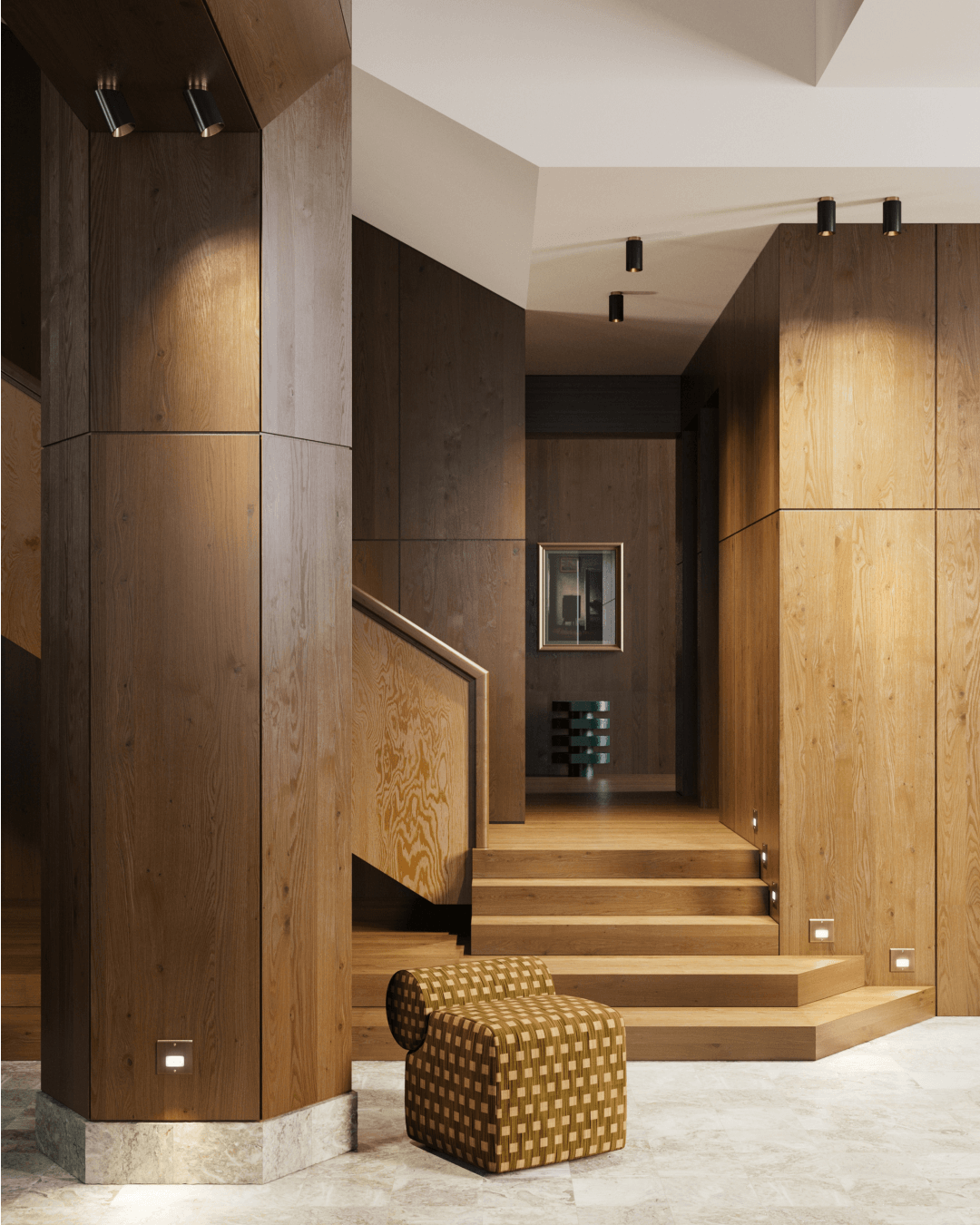
Tobo, finally, stitches this rich vocabulary together. A ceiling-mounted cylinder pared down to its essence, it serves as a visual anchor point. It is the quietest element in the repertoire: its role is to mark a threshold, punctuate the rhythm of a passageway, and supply the overhead light a space needs without ever intruding on the interior design.
An arm bending over an open book. A sphere glowing above a set table. A slender profile marking a passageway. None of these elements, on its own, is enough to tell the story of a place. And yet, in this careful interplay of scale and function, the essence of hospitality according to DCW éditions takes shape: the right object for every task — a considered presence, measured, never superfluous.