

Discover our e-shop and access a digital catalogue of over 40.000 design products.
Go to shopSpring Days | Use the coupon code SPRING15 to get 15% off on purchases starting at 480€ and SPRING20 to get 20% off on purchases starting at 4800€
Discover our e-shop and access a digital catalogue of over 40.000 design products.
Go to shop10 March 2026

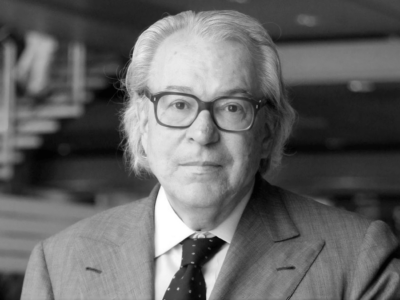
In the tradition of Scandinavian design, where simplicity and subtlety reign, Lars Tornøe’s design embodies a profound understanding of form, proportion, and the presence of objects in space.
The Norwegian designer, who has won several international awards, views design as a process of selection and refinement, where only those ideas that have a true sense of motivation are pursued. His designs begin with an abstract notion of expression and personality, driven by the need to create objects that are both timeless and modern.
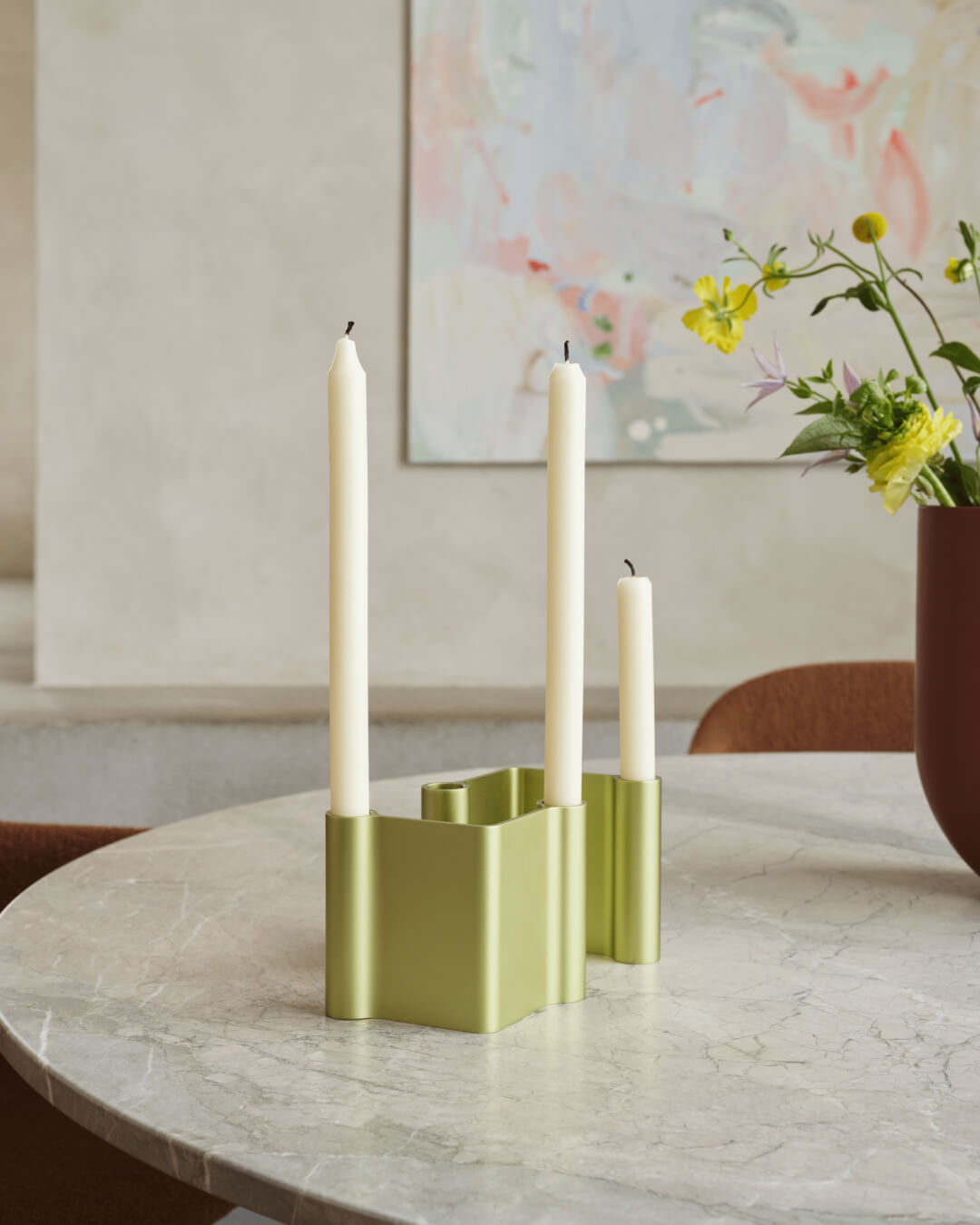
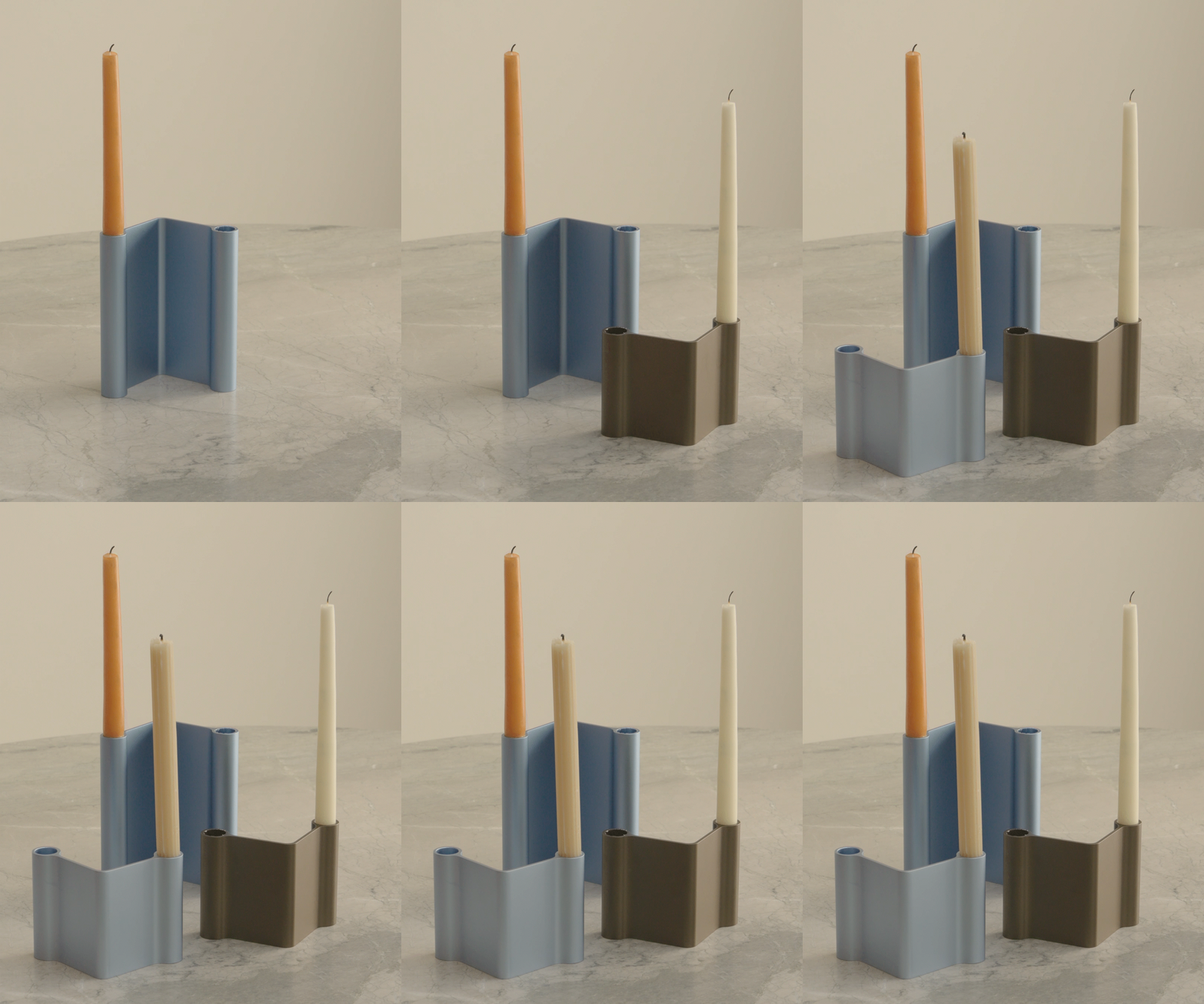
In the Pair Candleholder for Muuto, this design philosophy is realized in a exploration of modularity and gesture. From an initial idea of an extruded X-form, the design has evolved into a split composition that encourages interaction and reinterpretation. By breaking up the original form, Tornøe has managed to take a traditional four-arm candleholder and turn it into a flexible system that is both refined and playful, precise and open. Pair is more than just an object; it is a subtle encouragement to create compositions that change with the context, balancing the Scandinavian tradition of rigor with a sense of personal expression.
Lars, your work often balances clarity with character. What first sparked the idea for the Pair Candleholder?
The idea for Pair was sparked by the highly industrial process of extrusion. I was exploring ideas for extruded aluminum profiles, and it started with variations on a single piece that could accommodate four candles, shaped like an X when viewed from above.
At what point did the design shift from a single object to something modular and interactive?
The shift happened when it occurred to me that splitting the X into two parts—like > and <—would create something more interesting. This broke the original form into a flexible system, allowing for modularity and user interaction while maintaining the precision of the extrusion process.
The modularity invites users to create their own compositions. How important was it for you that people could actively shape the final expression of the object?
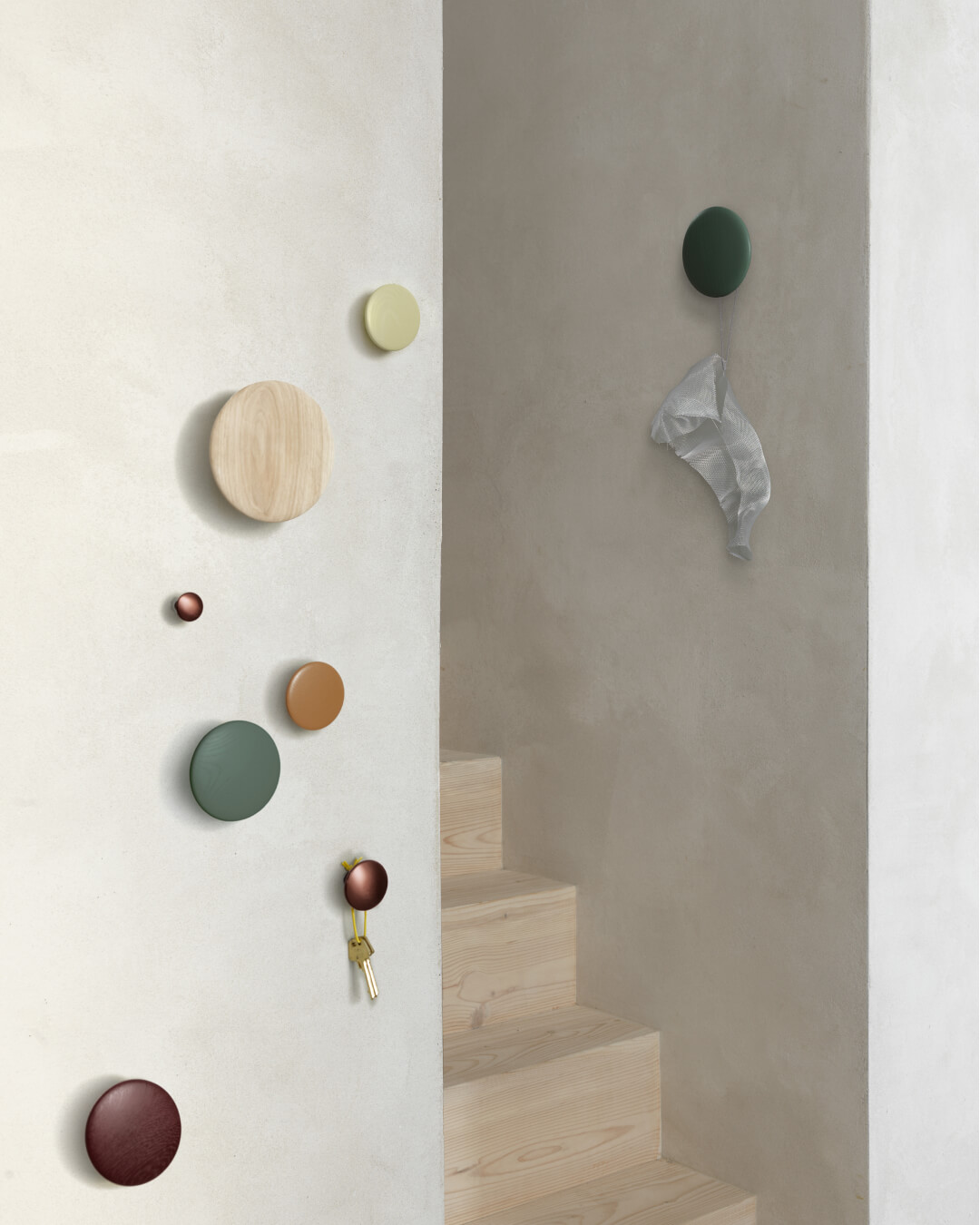
It was very important. By splitting the traditional four-arm candleholder into two parts, Pair encourages users to explore various configurations. This adds a layer of personal expression, turning a static object into one that’s playful and adaptable to individual preferences. This way of involving the user was also an important part of my first design for Muuto – the Dots – which became quite successful.
Pair can be split, mirrored, nested, or brought back to its original X form. How do you imagine it living within contemporary interiors?
I imagine Pair fitting into contemporary interiors as a versatile accent piece, hopefully with users trying out different placements and configurations. Depending on the choice of colour, you can either make it pop or let play more of a background role.
Scandinavian design is often linked to ideas of openness and accessibility. Do you feel Pair reflects something of that cultural background?
Sure – while I think Pair somewhat challenges the traditional aesthetic of candleholders, the inviting, tactile shape encourages exploration. I guess this can be linked to accessibility, making design not just functional but also approachable and adaptable for everyday use.
Candlelight carries strong associations with gathering and atmosphere. When designing Pair, did you think about the rituals or situations in which it would be used?
In Scandinavian culture, particularly during Advent, there’s a strong tradition of lighting four candles progressively over the four Sundays leading up to Christmas. Maybe that led me to start with the X-shaped initial idea with 4 candles. But I think the interactive properties were the most important driving force for the design.
In a time when many objects compete loudly for attention, Pair feels restrained and almost quiet. Is that sense of calm intentional?
I guess that is more a sign of my style.
What role did material and production, especially the idea of extrusion, play in defining the final form?
Well, the linear uniformity in the vertical direction of the product is 100% dictated by the production process. Aluminium is perceived as a hard material, but I did not want the product to feel hard. Therefore the soft curves became essential to make the design feel less technical.
Looking at your broader body of work, from The Dots to more recent projects, where does Pair sit within your ongoing design research?
Like most designers I am really into production techniques, and I think Pair is an example of a well utilised implementation of the aluminium extrusion process.
If there’s one quality or feeling you hope people experience when they interact with Pair, what would it be?
I hope they experience a well made and functional product, a product they feel attached to and use for many years. In my opinion, it is a really comfortable object to hold in your hand, not just to look at. It has a nice weight to it and feels both hard and soft at the same time.