

Discover our e-shop and access a digital catalogue of over 40.000 design products.
Go to shopSpring Days | Use the coupon code SPRING15 to get 15% off on purchases starting at 480€ and SPRING20 to get 20% off on purchases starting at 4800€
Discover our e-shop and access a digital catalogue of over 40.000 design products.
Go to shop3 March 2026

One hundred years after his birth, Verner Panton remains a radical figure in the landscape of twentieth-century design.
Not only for his bold use of color or his experimentation with plastics, but for redefining the very concept of environment. In Verner Panton’s vision, every object forms part of a larger landscape. Seating, furnishings, light and textiles come together to shape an immersive space, an emotional architecture in which color becomes structure and form becomes spatial language.
A student of Arne Jacobsen, Panton soon pursued an independent path beyond Danish functionalism. The 1960s marked the beginning of a research-driven exploration that merged technology and imagination. Molded plastics, continuous surfaces and saturated hues were not stylistic exercises, but reflections on the future of living. The home became a site of experimentation, where technical innovation met a clear and personal design vision.
The 1958 Heart Cone Chair, produced by Vitra and now presented in a special two-tone Anniversary Edition, demonstrates his sculptural attitude. A theatrical form that transcends function and asserts itself as a spatial presence.

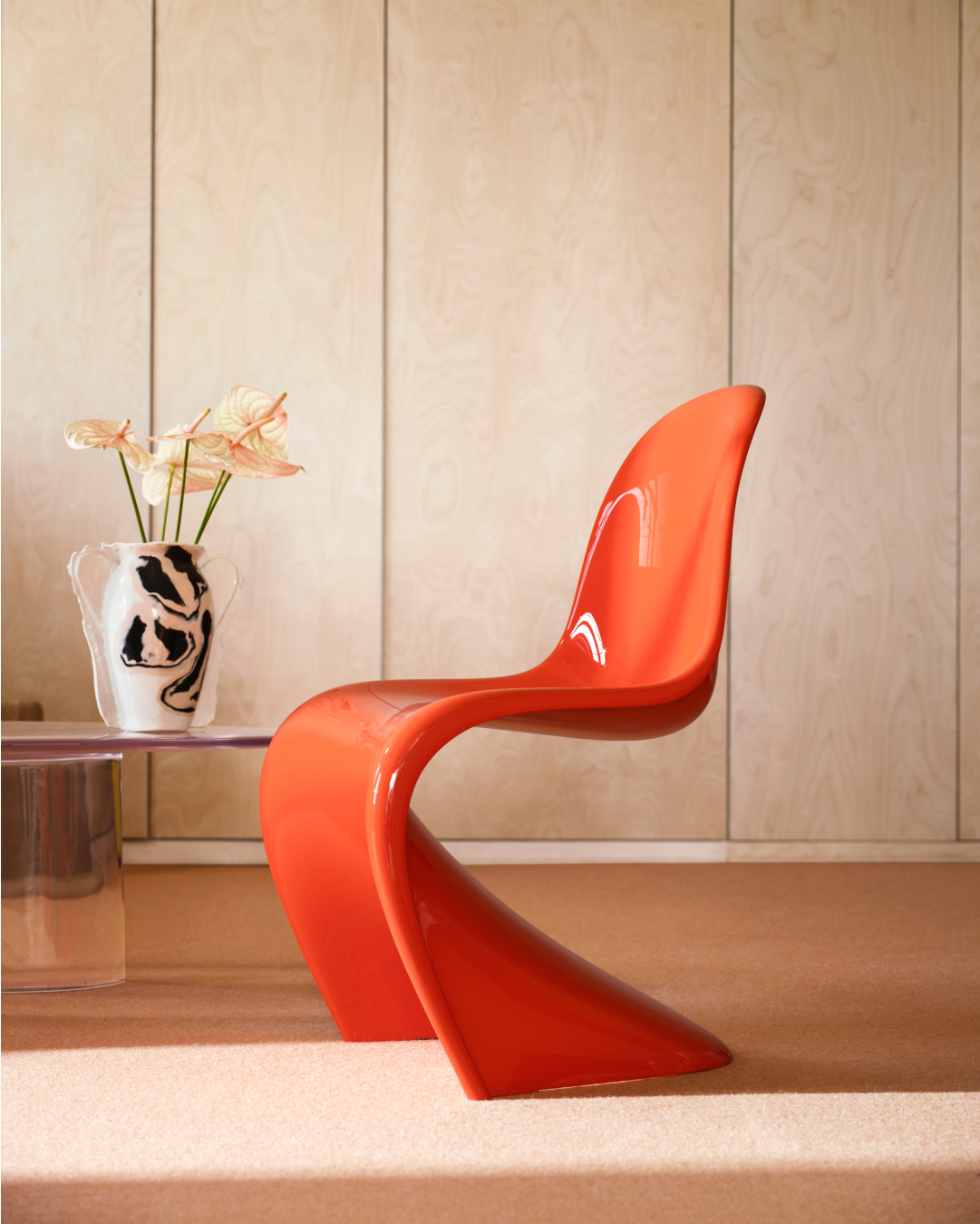
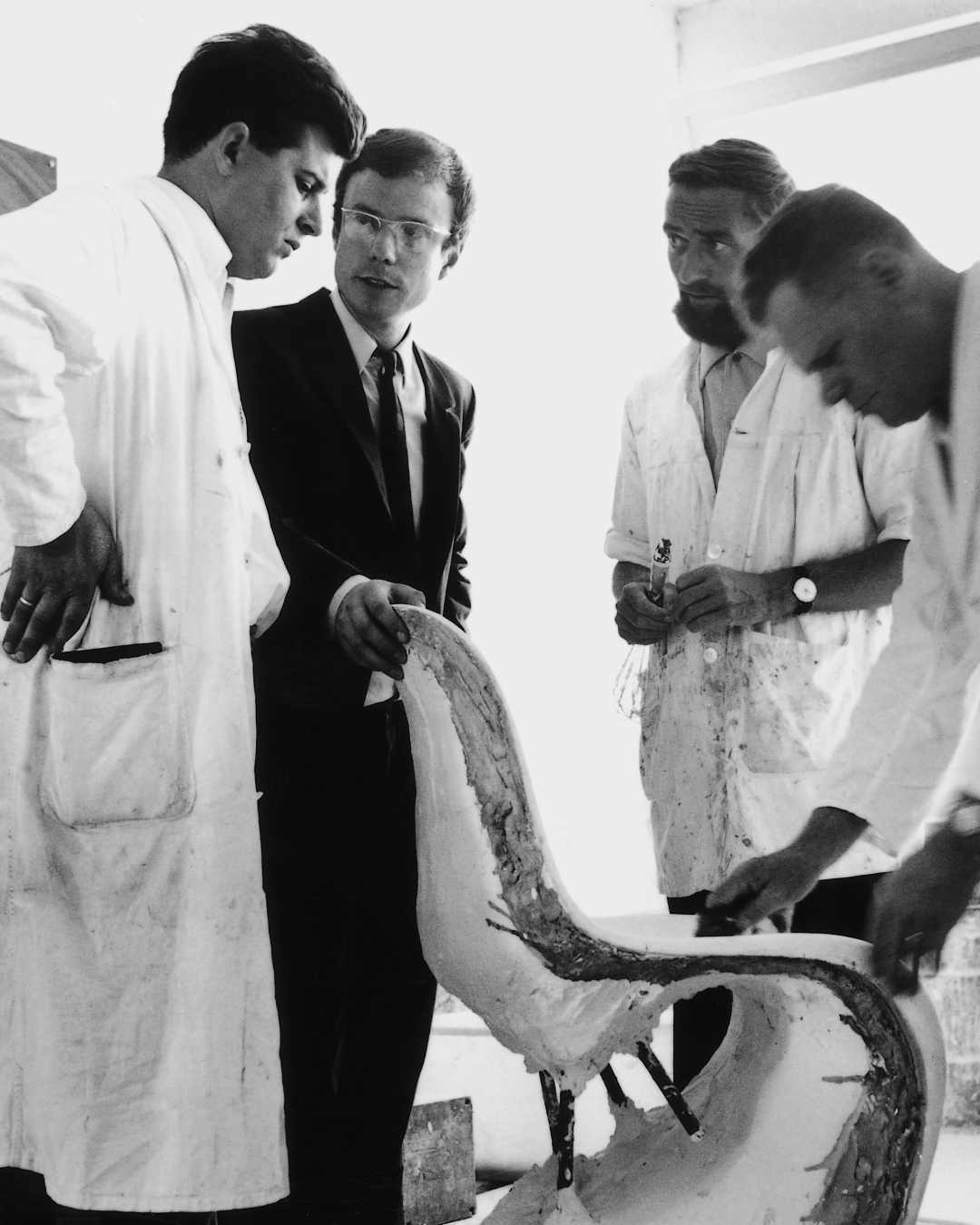
In 1967, the Panton Chair was introduced, also produced by Vitra. It was the first fully plastic chair made from a single piece and manufactured in series. Its fluid silhouette integrates structure and seat in one continuous gesture. More than a pop icon, it represents an industrial turning point capable of uniting technical innovation with expressive force.
During the same years, light became a narrative tool. With &Tradition, the Flowerpot translated the cultural spirit of the era into a pure geometry. Two hemispheres in balance create a suspended volume that diffuses soft, enveloping light while preserving its chromatic intensity over time.

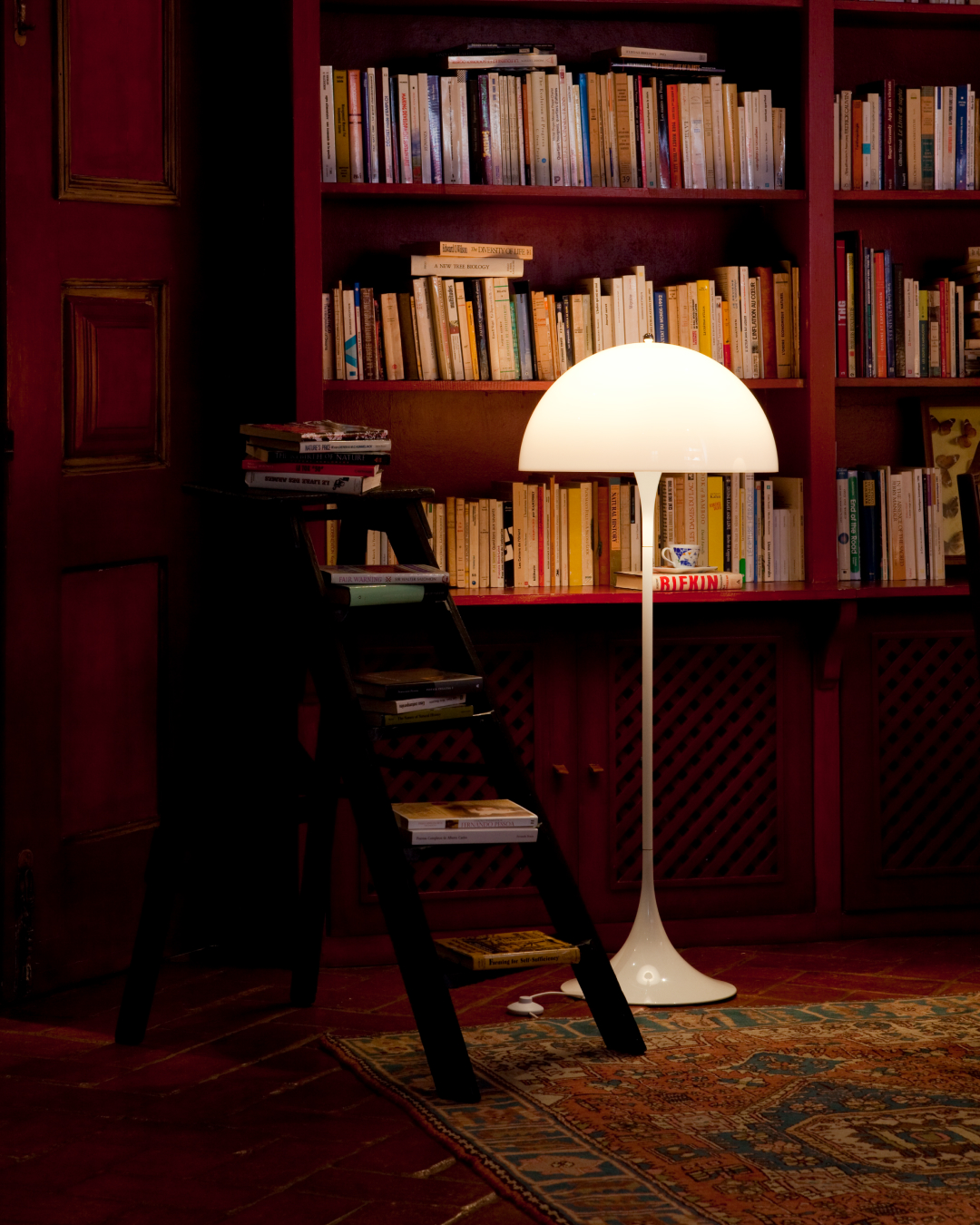
In 1971, with Louis Poulsen, the Panthella was born. A luminous body that eliminates the distinction between base and shade, transforming the lamp into an autonomous architectural presence. Light reflects across its opaline surfaces, creating continuous atmospheres in measured dialogue with space.

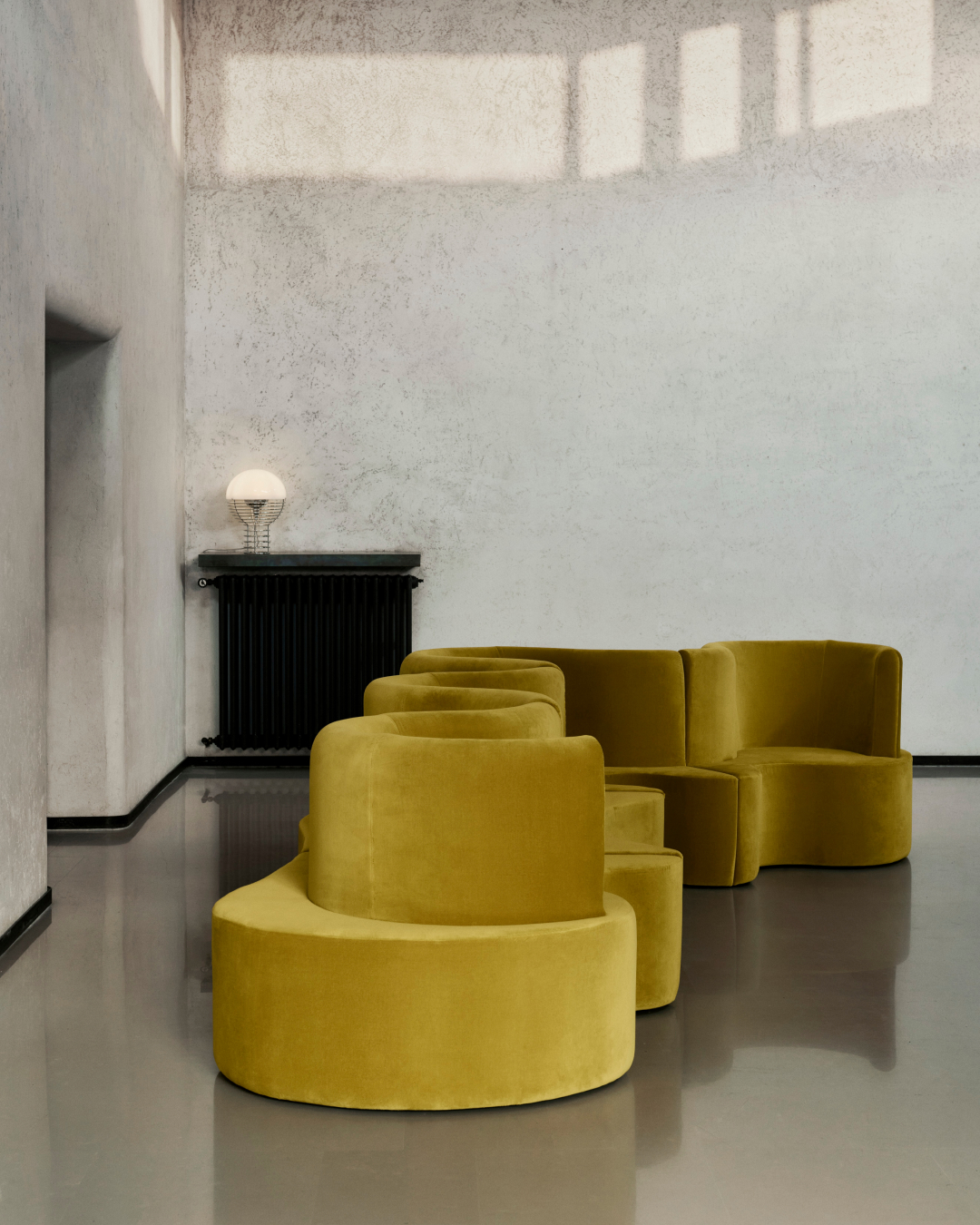
Through Verpan, modular systems and furnishings express the coherence of his thinking. In 1969, the Cloverleaf Sofa pushed the concept of modularity to its limit. A fluid system that moves beyond the traditional front-facing sofa and turns seating into a shared landscape.
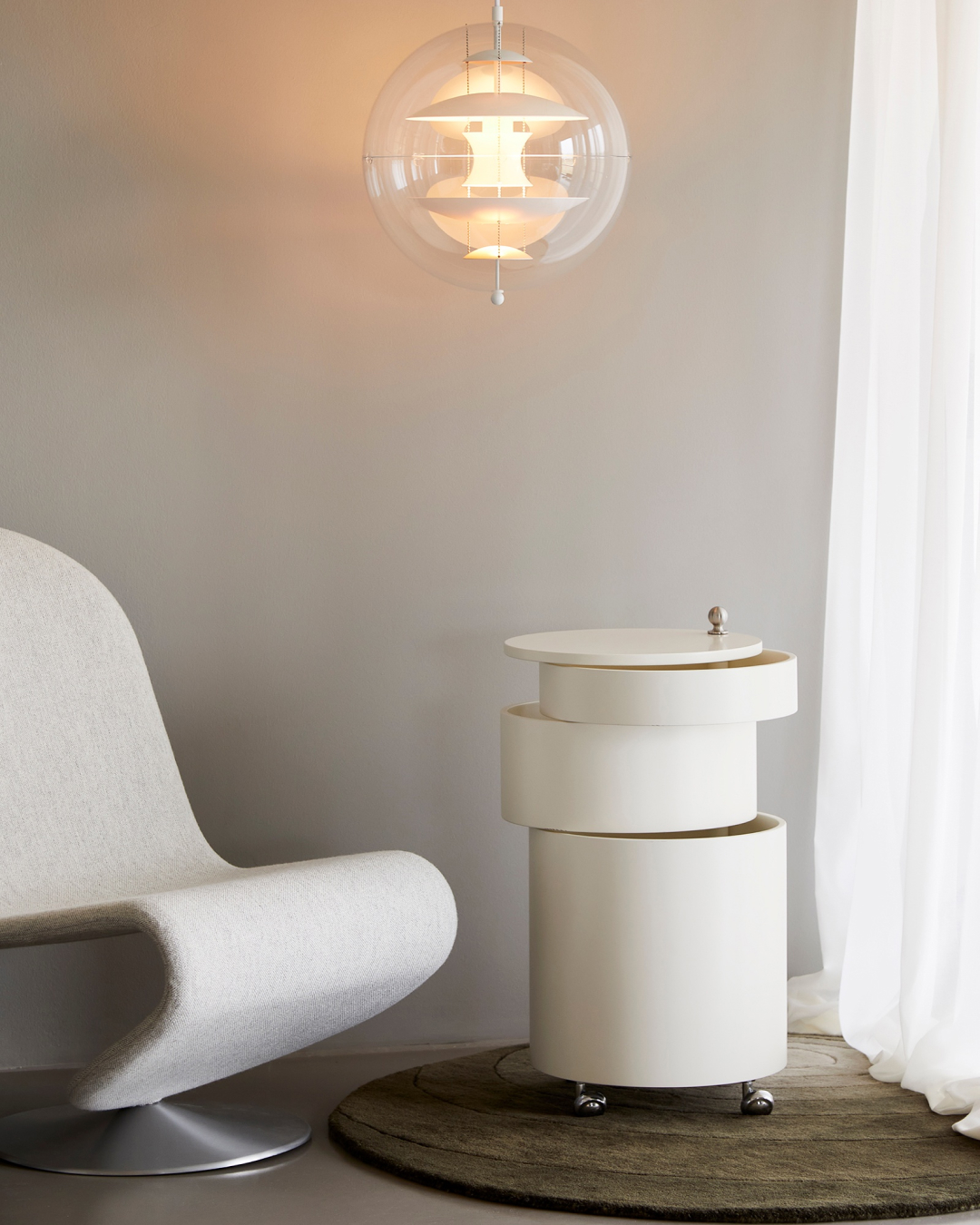
Earlier, in 1963, with the Barboy, Panton had already introduced a new interpretation of function. A mobile, cylindrical storage unit that is both essential and playful.
Today, his legacy feels remarkably current. In an era oscillating between minimal restraint and the search for identity, Panton reminds us that design can be a total experience. Color becomes architecture. Form becomes cultural gesture.
The centenary of 1926–2026 does not simply celebrate a series of reissues. It reaffirms a vision of design capable of transforming space into emotion and the object into vision.