

Discover our e-shop and access a digital catalogue of over 40.000 design products.
Go to shopFrom Inspiration to installation. Discover Mohd Interior Design Studio
Discover our e-shop and access a digital catalogue of over 40.000 design products.
Go to shop7 September 2026
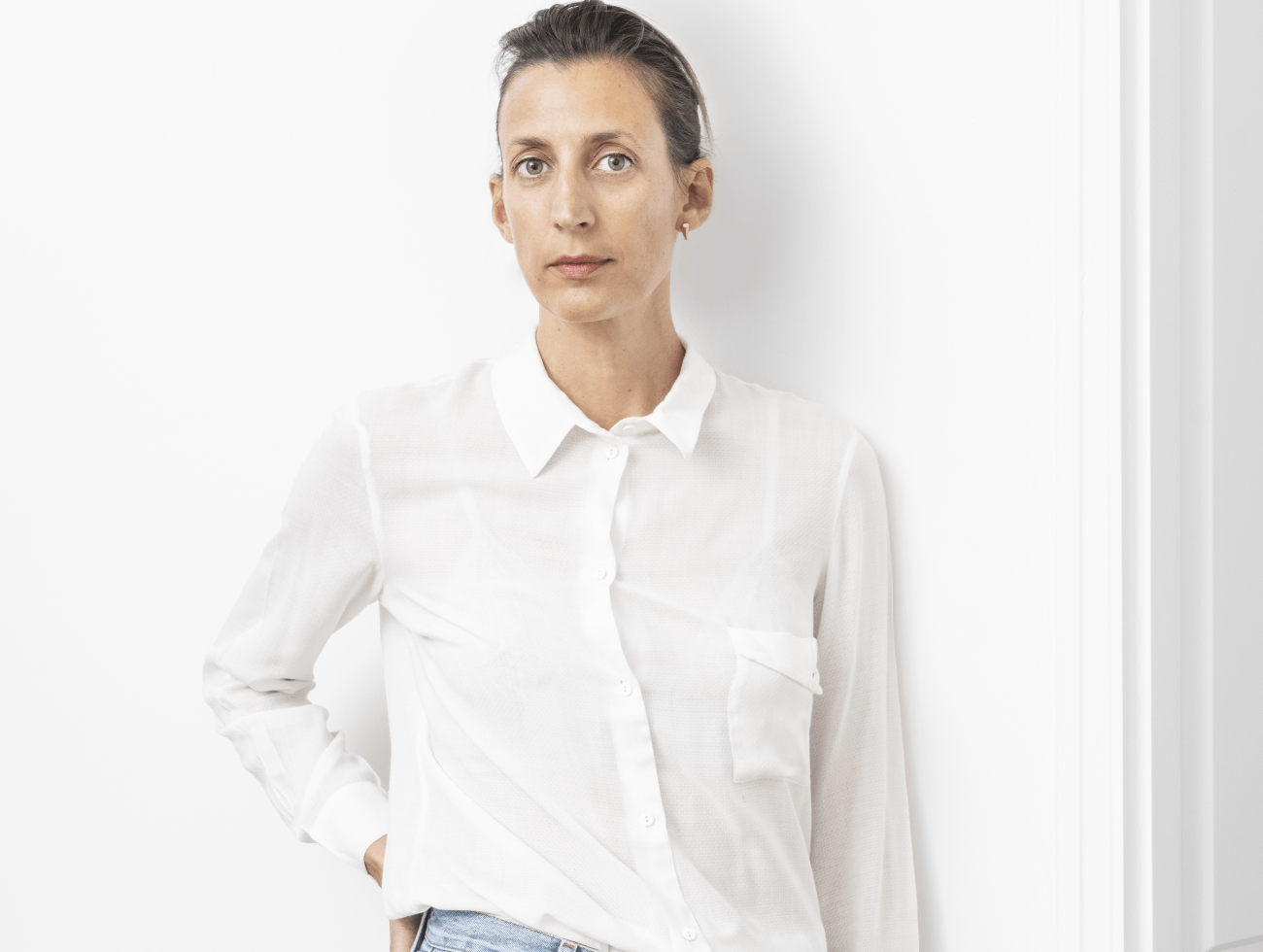
Maddalena Casadei talks about her approach to design, between research, attention to detail and a new idea of a slower, more responsible way of designing.
A designer able to move between research, product design and experimentation, Maddalena Casadei has built her career through dialogue with different figures and design cultures. From her experience at James Irvine’s studio to collaborations with leading names in contemporary design, her work is based on rigour, observation and attention to detail. In this interview, she shares an idea of design that moves away from the pursuit of novelty at all costs: an approach in which time, responsibility and quality become essential tools for creating objects designed to last.
Interview conducted in Italian – English translation and editorial adaptation.
Your education spans different fields, including design, research, and experimentation. Which encounters or experiences have contributed the most to shaping your way of designing?
To be honest, I am not sure I would define myself as an experimental designer. I see myself more as a designer who enjoys moving across different scales, even though product design remains my favourite dimension.
The encounter that has certainly influenced me the most was the one with James. Over the years, I have also had the opportunity to meet many interesting and inspiring people, such as Alberto Meda, Konstantin Grcic, and the Industrial Facility team. Each of them has left a small but significant mark on my education and on the way I look at design.
That said, I have never had a particular iconic figure I aspired to follow. I have always preferred to build my own path through dialogue and exchange with different people essentially through what we can call personal experience.
You worked alongside James Irvine, a figure who left an important mark on contemporary design. What is the most valuable lesson you took from that experience and that still guides your work today?
The most valuable lesson I brought with me from my experience with James was, first and foremost, respect for people at every level.
From a design perspective, he taught me the importance of control and attention to every detail. Over time, I believe I have added other values that I consider equally fundamental: the ability to accept compromise, the tendency to focus on my own path rather than comparing myself with others, strong determination and an awareness of the power of collaboration.
Your projects seem to emerge from a balance between rigour and sensitivity. How does your creative process take shape when you begin designing a new product? Where do you start, and what do you try to preserve until the final result?
It is not easy for me to describe my work from within; I prefer others to interpret and read it with greater objectivity.
My process certainly always begins with research and observation. However, ideas often become clearer in less rational moments: it frequently happens that, in the morning, while half awake, intuitions and solutions suddenly find their own form.
I believe that, consciously or unconsciously, our lived experiences represent the true wealth we draw upon when we design. This is why the process is never linear: many things can change during the development of a project.
Perhaps the most difficult challenge is knowing how to let go of some initial assumptions when we realise that better paths exist. Over time, I have learned that these changes of perspective often lead to the most interesting results.
We live surrounded by objects, often chosen quickly and impulsively. As users and consumers, what aspect of design should we pay more attention to in order to build a more conscious relationship with what we buy and use?
Impulse can be a poor advisor, both in life and when making purchases.
Today it is difficult to shift people’s attention away from the simple combination of taste and price, which is why many still buy, for example, unauthorised versions of iconic pieces.
However, I believe that if we want to become more responsible consumers, we should learn to look beyond the object itself and understand its production and creative process. Behind every product there are always people who have dedicated time, skills, intelligence and work to creating it.
Buying consciously therefore means recognising the value of all this. It is a choice that has both an ethical and a practical dimension.
Perhaps we should move away from a widespread attitude “well, I’ll buy it, it’s cheap anyway and if necessary I’ll just throw it away” and instead recover a more respectful and lasting relationship with the objects we choose to bring into our lives.
Looking at today’s design landscape, which themes or changes excite you the most, and in which directions do you feel it is important to continue experimenting in the coming years?
At the moment, I am working on products characterised by very long development timelines and significant investments, because great value is placed on every single element of the project. The goal is to find a balance between aesthetics, functionality, production costs, durability and sustainability. I believe that if more companies returned to adopting an approach that pays greater attention to the process and less exclusive focus to the final result, we would probably produce less, but with greater awareness. A return to slowness understood as a value and as a quality. Even today, we see companies presenting dozens of new products at trade fairs, often very similar to one another. This overproduction risks generating objects without a real need or identity, so much so that many of them are quickly forgotten. I believe that both companies and designers should develop a more critical perspective and be less driven by the constant pursuit of novelty at all costs. Today, true experimentation does not necessarily mean producing more and more, but dedicating more time, attention and responsibility to what we choose to bring into the world. Perhaps the real change will be precisely this: having the courage to do less, but to do it better. It may seem like a reflection we have already heard many times, but I believe this principle still struggles to find truly fertile ground.