

Discover our e-shop and access a digital catalogue of over 40.000 design products.
Go to shopFrom Inspiration to installation. Discover Mohd Interior Design Studio
Discover our e-shop and access a digital catalogue of over 40.000 design products.
Go to shop12 October 2026
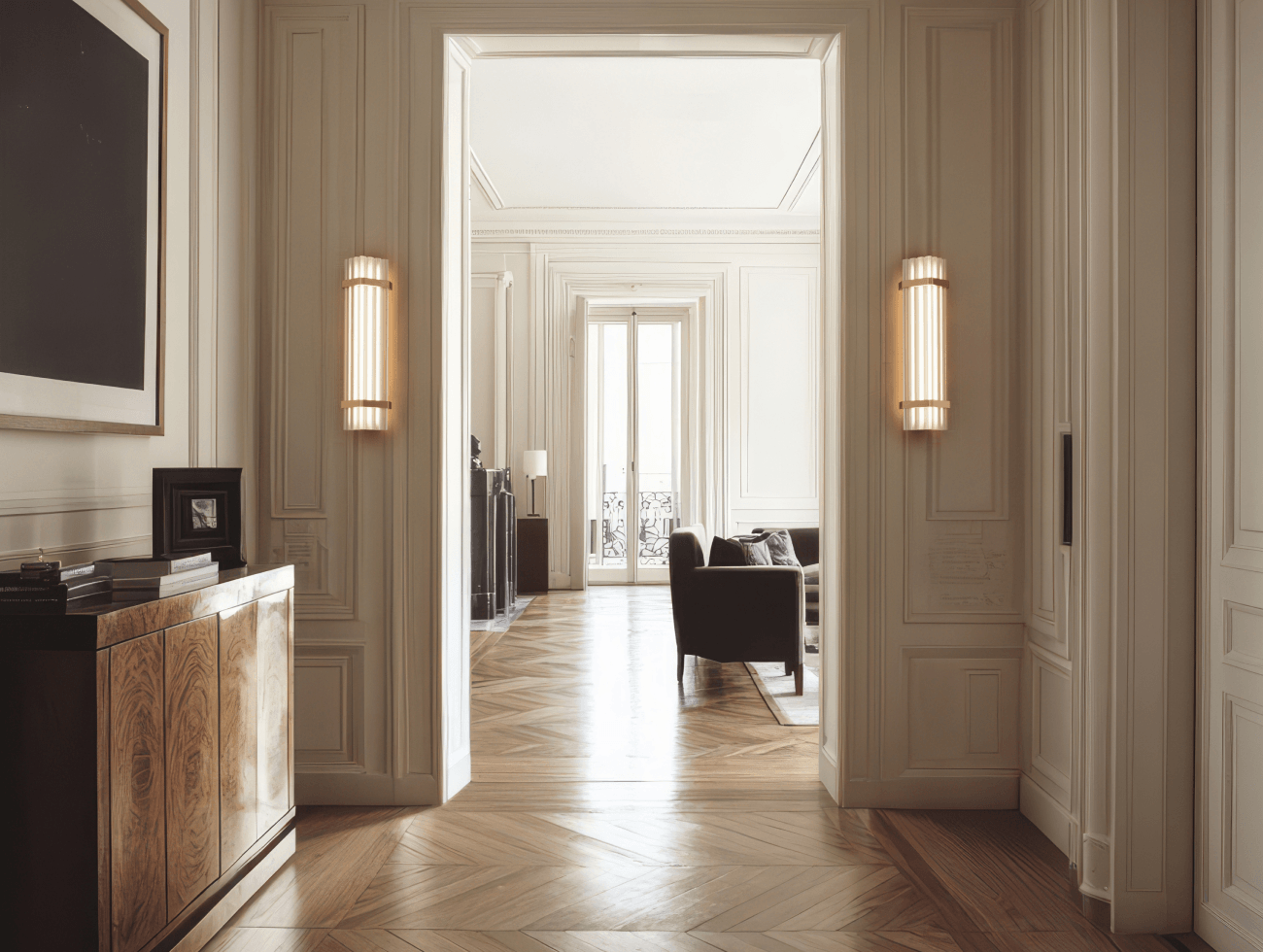
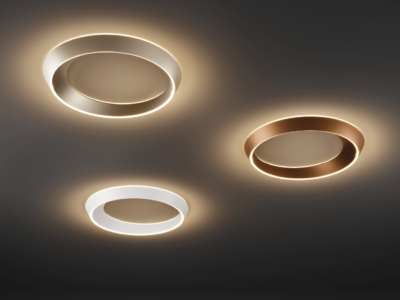
Dissolving into the setting, composing a geometry, bringing the surroundings back into focus: Thierry Dreyfus, Lutz Pankow and Yuji Okitsu offer three interpretations of the relationship between light and space for DCW éditions.
Between 1936 and 1939, in the façade of the Johnson Wax Building, Frank Lloyd Wright used glass tubes to bring in outside light and distribute it through the interiors, with a remarkably soft effect. Seagull, Thierry Dreyfus‘s design for DCW éditions, takes its inspiration from this approach, in which light spreads without revealing its source.
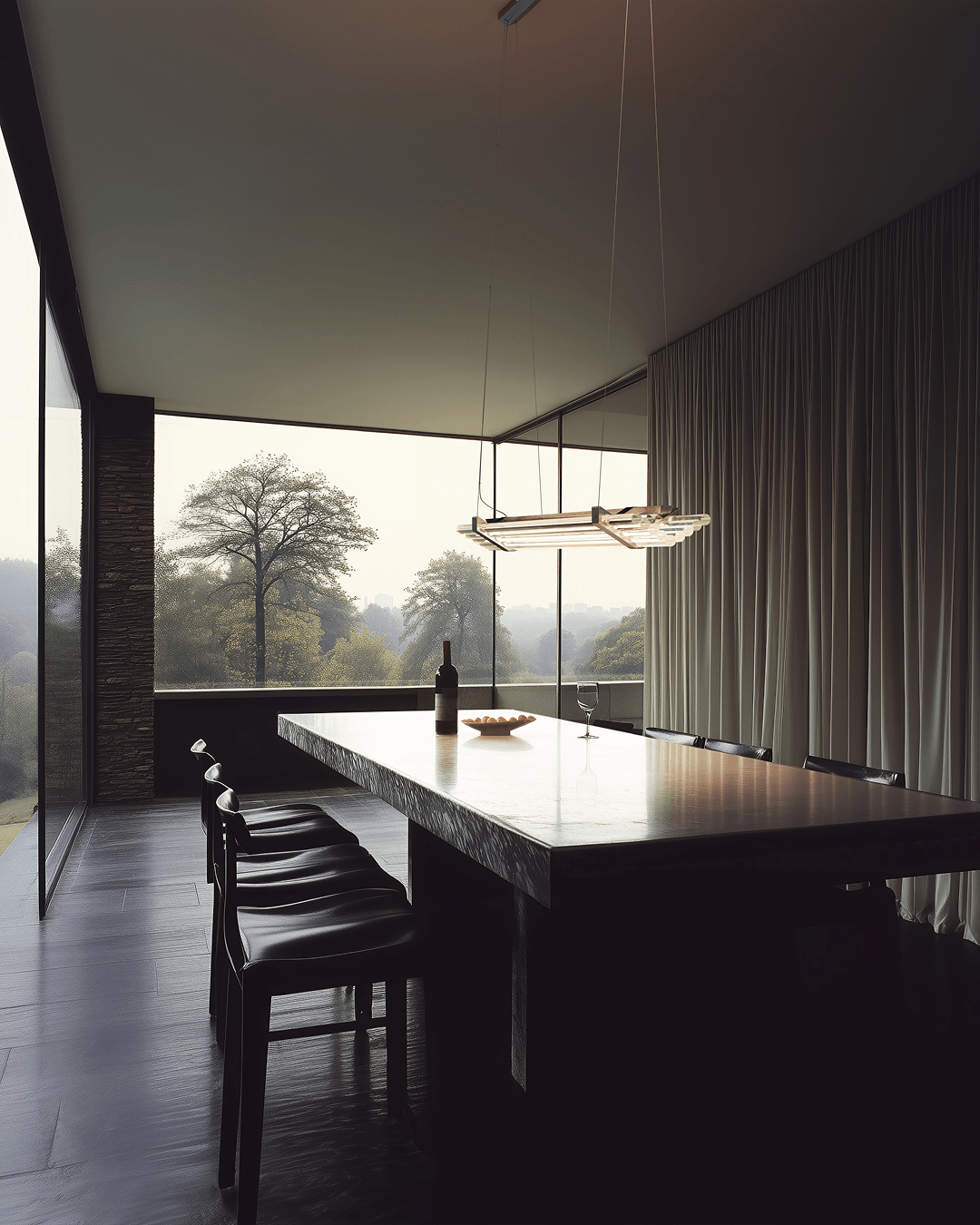
The aim is for light to merge with the space without overpowering it. Dreyfus designed these fixtures imagining the ones he would want in his own home today, and defined their character through an Art Deco elegance reinterpreted with a contemporary sensibility. The collection includes horizontal pendants and a wall light, in a gold tone and with a warm light. Few elements and a restrained vocabulary: the object stays secondary to what the light makes of the space that receives it.
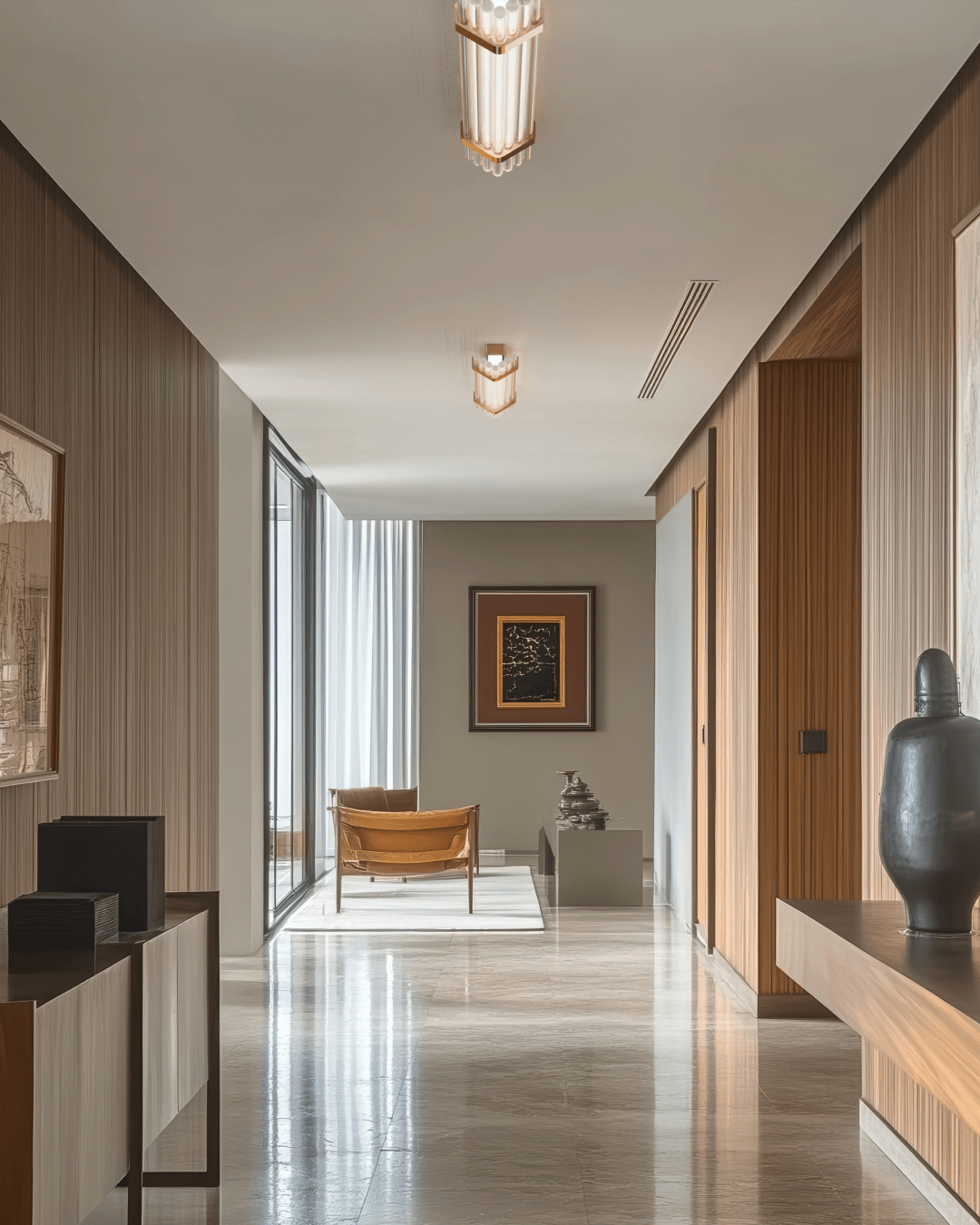
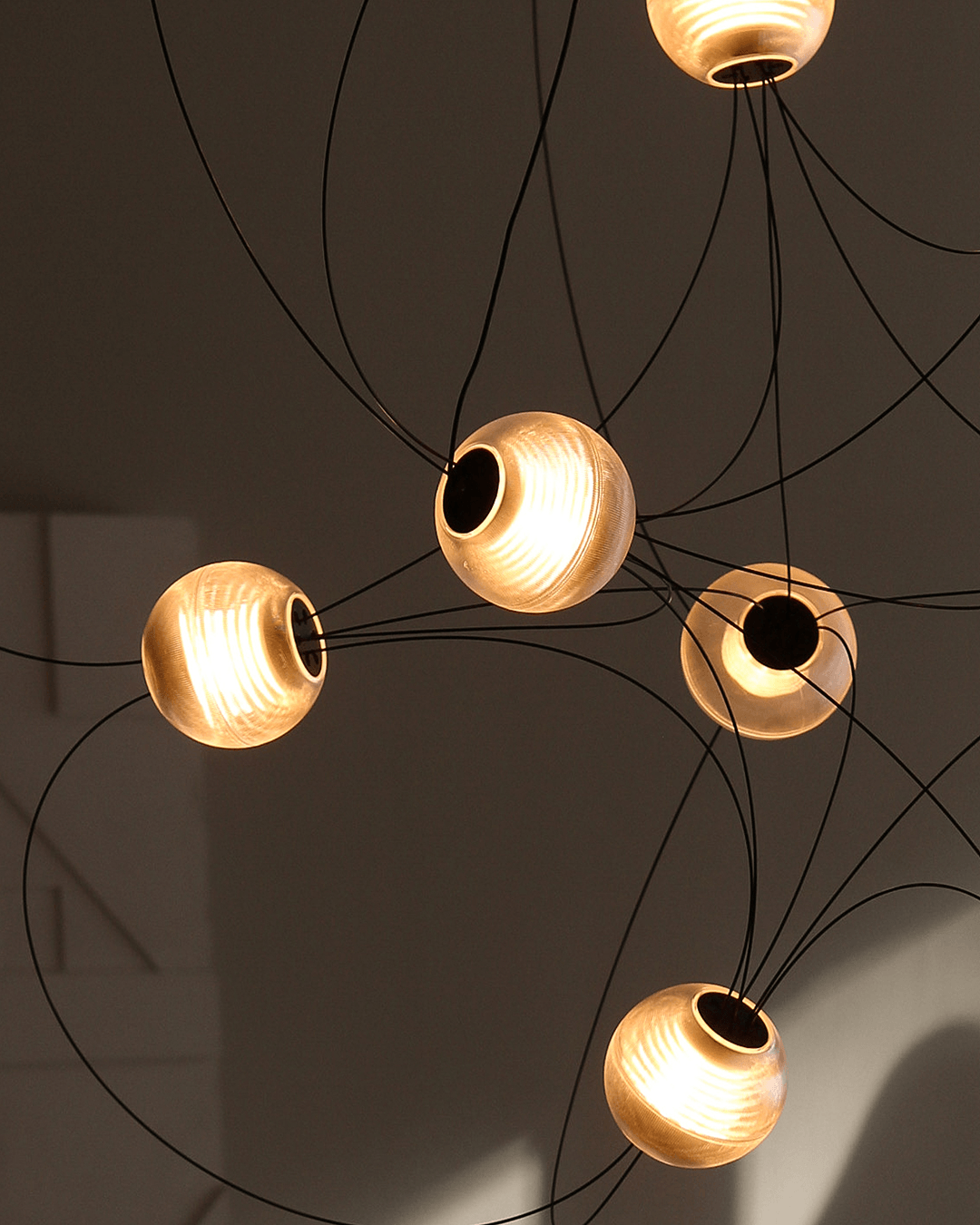
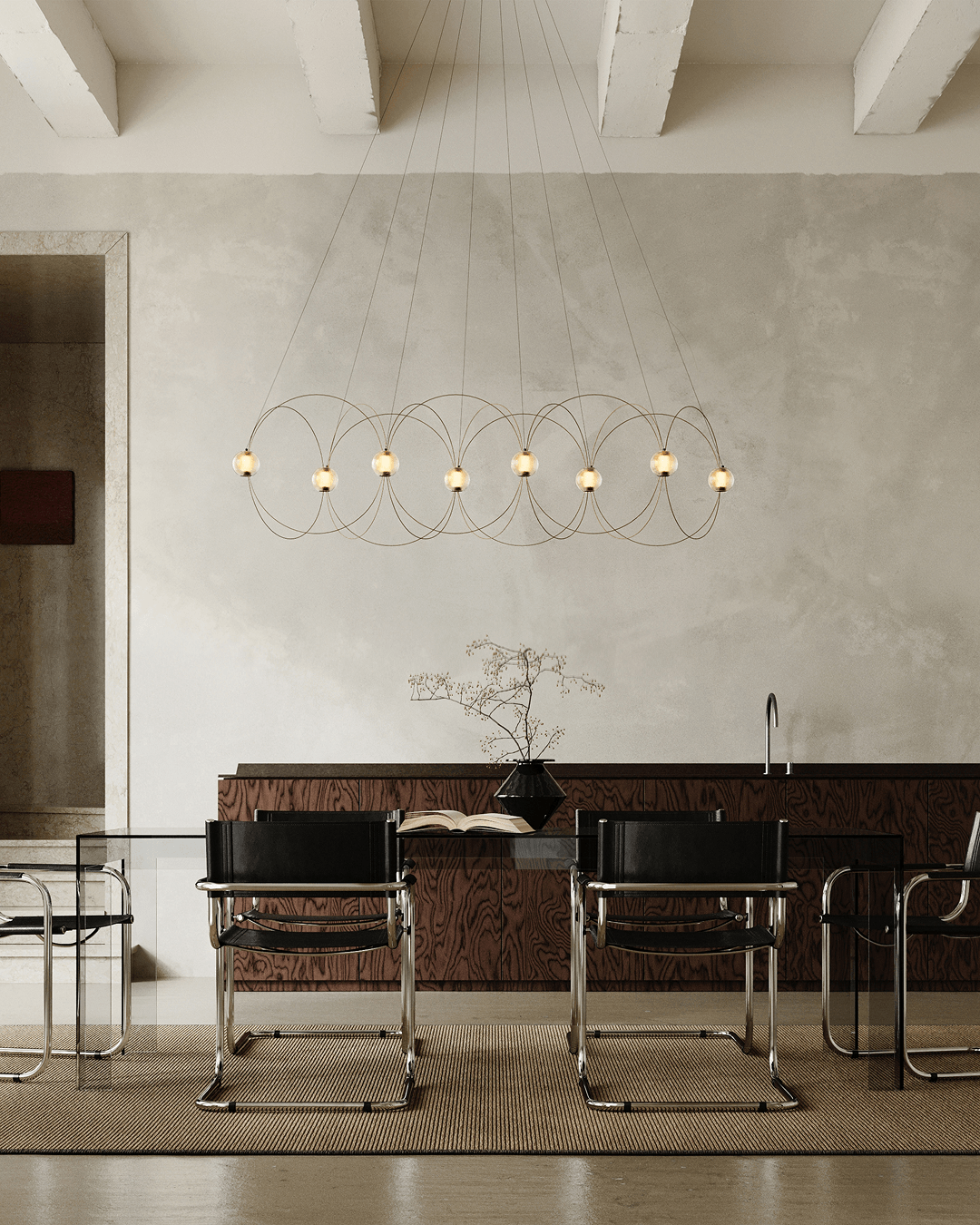
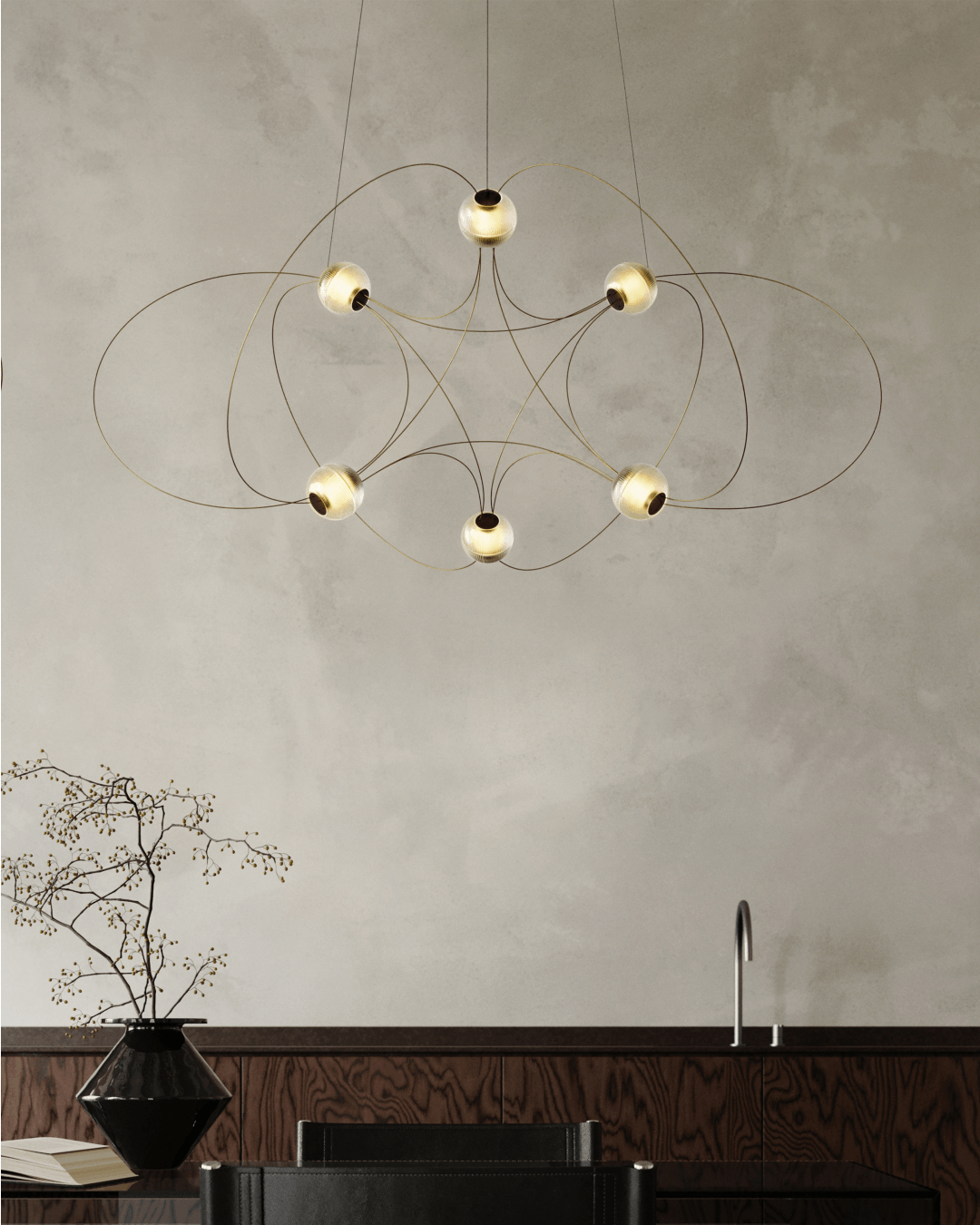
With Munari, the premise changes: light does not dissolve into the space but takes on a structure, a geometry made of points of light. Lutz Pankow‘s constellations lend themselves to different readings: a flight of butterflies, planets in motion, even silent music. This plurality is part of the design, which imposes no interpretation.

Behind the poetic image, however, lies a matter of construction. In most chandeliers, the supporting structure and the one that carries the current are separate; in Munari, Pankow explains, they are one and the same. The system rests on just two repeating elements, the luminous sphere and the spring-steel wires, from which different configurations and sizes are obtained: two-dimensional geometries for low ceilings, three-dimensional ones for taller rooms. In the Munari 6, 8 and 10 models, made of aluminium, polycarbonate and steel, the rigour of the construction gives way to the overall effect: a true sculpture of light suspended in space.
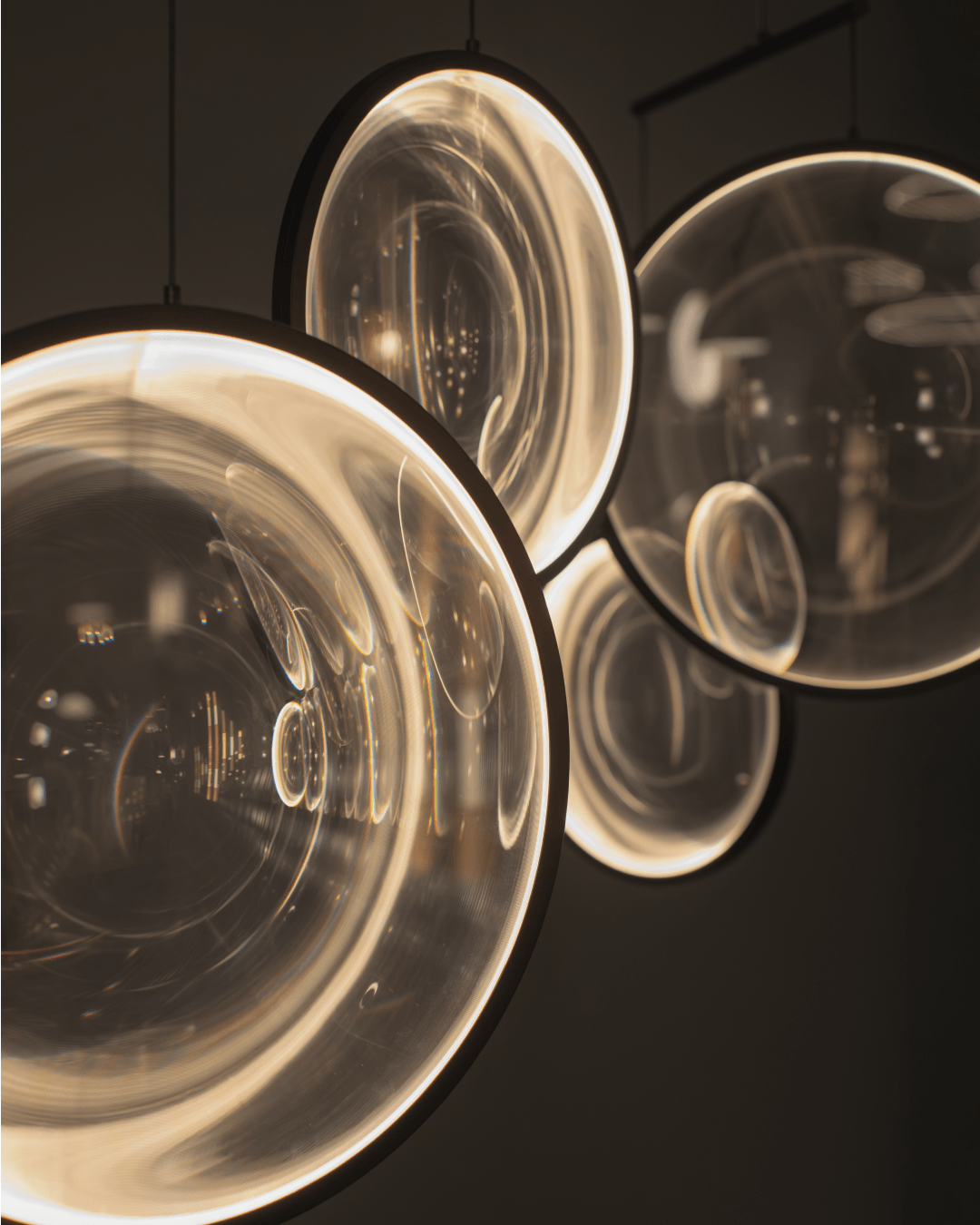
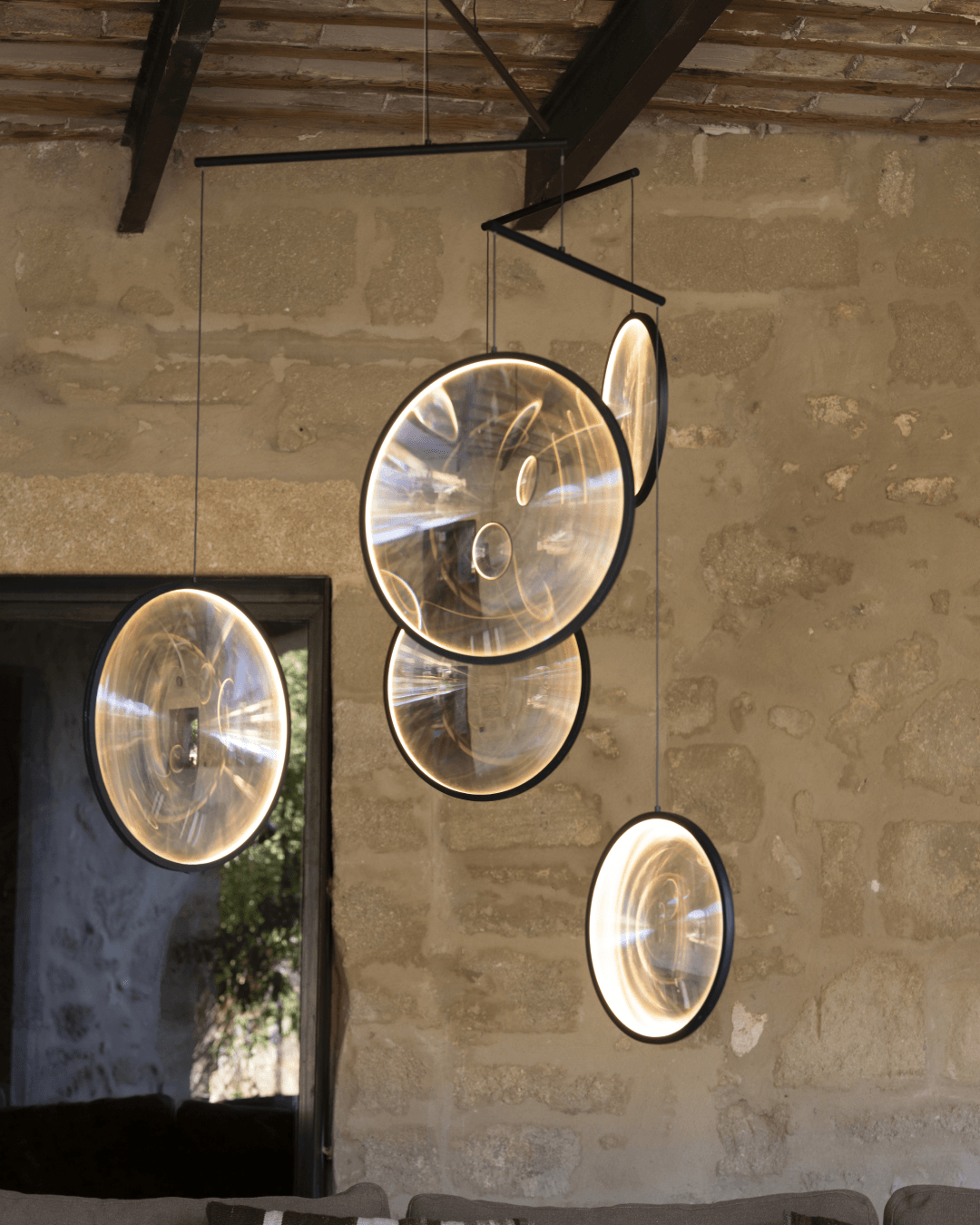
With Focus, Yuji Okitsu creates a suspended structure, an object that seems to float in a weightless world: flat, slender, lightweight lenses, hung and paired with LED lights. The idea is to bring the elements that make up a setting – light, air, landscape – back into focus and recompose them, so that the space finds itself before a new scene each time, in response to its slightest changes. Focus 3, 4 and 5, made of aluminium and PMMA, come in three versions, with three, four or five lenses, designed for different spaces.
Related articles