

Discover our e-shop and access a digital catalogue of over 40.000 design products.
Go to shopFrom Inspiration to installation. Discover Mohd Interior Design Studio
Discover our e-shop and access a digital catalogue of over 40.000 design products.
Go to shop1 October 2026

At the first edition of Currents Berlin, two manufacturers with deeply rooted design histories explored a similar question from different perspectives: how can heritage remain relevant without becoming nostalgic?
Berlin has never needed a single design language to define itself. Its identity has always emerged through coexistence: industry and experimentation, established manufacturers and independent studios, historical references and new forms of production. This fragmented yet interconnected landscape was precisely what Currents Design Berlin set out to make visible during its first edition, held from September 10 to 12 across the city. Conceived as a community-based event, Currents brought together brands, designers, schools and unconventional locations rather than concentrating them within a traditional fair format.
Within this distributed programme, TON and Tecta offered two particularly interesting interpretations of what it means to work with history today. Both are manufacturers whose identities are inseparable from European design heritage, yet their presentations avoided treating the past as something static. Instead, craftsmanship and modernism became starting points for contemporary conversations around durability, production and the evolution of objects.


For TON, the question was almost explicit: what can 165 years of craftsmanship teach us about the future? The company has been bending wood at its factory in Bystřice pod Hostýnem since 1861, preserving a manufacturing knowledge that has survived dramatic changes in both industry and domestic life. At Currents, this history was framed through ideas of longevity, resource-conscious production and timelessness – suggesting that sustainability can begin not only with new materials or technologies, but with the capacity to make objects worth keeping.


The brand also presented TON x Büro Famos at its Berlin space on Chausseestraße, continuing its relationship with the Berlin-based studio founded by Hanna Litwin and Romin Heide. The collaboration is particularly representative of TON’s contemporary direction: Büro Famos previously designed the Logs coat hook using wood offcuts unsuitable for chair production, transforming manufacturing waste into a deliberately simple everyday object. In this sense, tradition becomes less about reproducing historical forms than about understanding the intelligence embedded in a material and finding new ways to use it.


Tecta approached the relationship between past and present through Berlin itself. Inside a former blind factory on Pücklerstraße in Kreuzberg, the company created Tectas Berliner Zimmer together with designer Pascal Hien. The installation brought together works developed with designers connected to the city: including Hanne Willmann, Geckeler Michels, Katrin Greiling, Daniel Lorch and Andree Weissert – placing contemporary pieces within Tecta’s longer dialogue with the Bauhaus and modernism.
Rather than presenting the Bauhaus as a closed historical chapter, the project suggested it can remain a working methodology: one that changes as new designers, materials and social conditions enter the conversation.

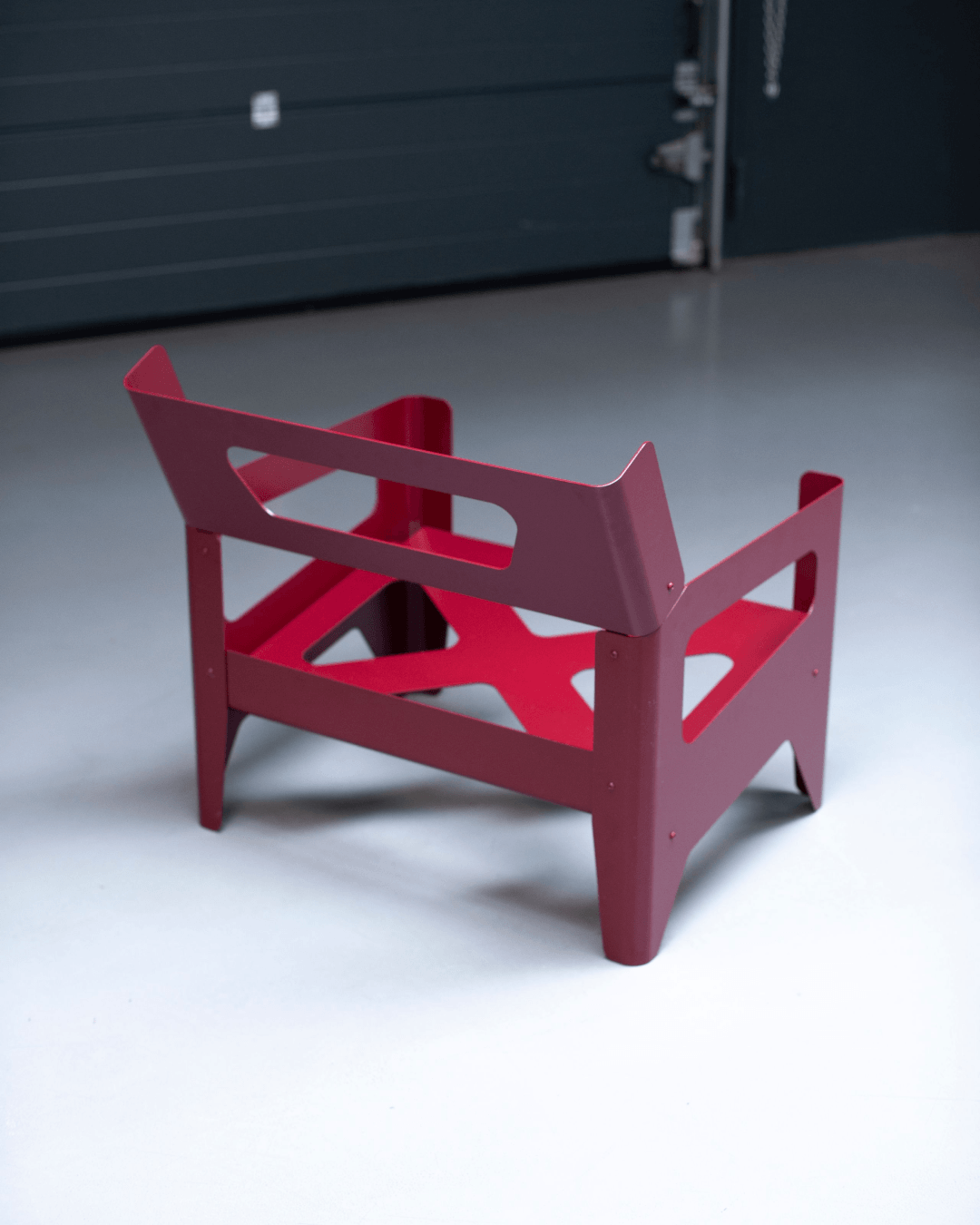
This became even clearer in Erlkönig – Design in Process, where Tecta and Pascal Hien revealed early prototypes from an upcoming collection of club chairs and sofas. Instead of hiding the uncertainty that precedes a finished product, the presentation exposed decisions around material consumption, dimensions, comfort, affordability and usability. The emphasis was not simply on what an object looks like when complete, but on the negotiations that allow it to become a viable piece of furniture in the first place.
Seen together, TON and Tecta offered an interesting counterpoint within Currents Berlin. Neither rejected its history, yet neither appeared interested in preserving it untouched. For both, heritage becomes valuable precisely when it can be questioned, adapted and put back into circulation.
Related articles