

Discover our e-shop and access a digital catalogue of over 40.000 design products.
Go to shopSpring Days | Use the coupon code SPRING15 to get 15% off on purchases starting at 480€ and SPRING20 to get 20% off on purchases starting at 4800€
Discover our e-shop and access a digital catalogue of over 40.000 design products.
Go to shop13 December 2025

Designer Antoni Arola discusses his approach to light, his collaboration with Vibia, and his exhibition in Tokyo, exploring beauty, atmosphere, and sustainability over time.
Antoni Arola is a designer with a unique sensitivity to light, materials, and beauty as cultural values. Although Spanish, he has developed a strong aesthetic and spiritual connection to Japan — which he describes as a “Japanese soul” that has been present since childhood — over the years, Airola has developed a design approach in which the lamp is not a simple object, but a generator of atmosphere.
His work ranges from light installations to the most refined technical systems, and is distinguished by a constant search for visual simplicity capable of concealing complex processes.
His career has led him to collaborate with companies such as Vibia and Santa & Cole, and to exhibit internationally, including Tokyo, a city with which he has a particularly intense creative and personal connection.
How did the collaboration with Vibia, and specifically the Circus collection, come about?
Circus is a very ambitious and extensive project. The goal was to create a system capable of illuminating spaces in different ways, suited to different contexts: a home, a restaurant, indoor and outdoor spaces.


It was a very long project, precisely because the final simplicity of the product doesn’t reveal the complex process behind it. It’s a multi-product, or rather a system, and the entire effort was to translate this complexity into a simple and clean visual language.


How does your approach to design is close to Vibia’s approach?
Vibia is a unique company: despite being large, it maintains a very direct, almost familial, dialogue with the designer. This is rare, because in large companies, everything is usually diluted. Here, however, there’s a concrete dialogue, and above all, great technical ability: the means and expertise to truly realize what you imagine. This is a luxury for a designer.
You were recently featured in an exhibition curated by Santa&Cole at the Karimoku Center in Tokyo: can you tell us more about this experience?
The exhibition was born from the proposal of a Japanese architect who visited my studio in Barcelona, fell in love with the place and my work, and invited me to exhibit in the Karimoku Center, a three-story building.


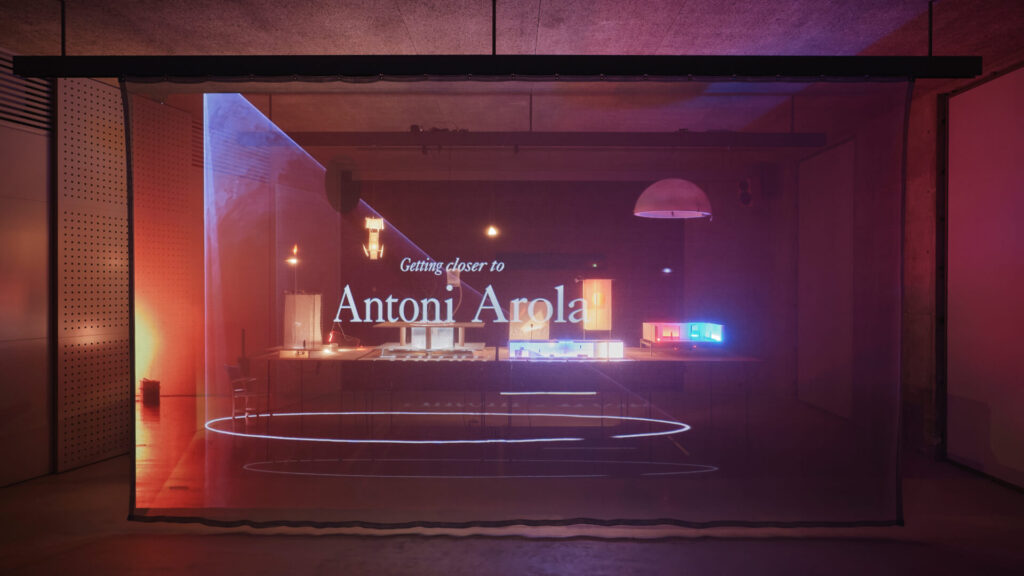
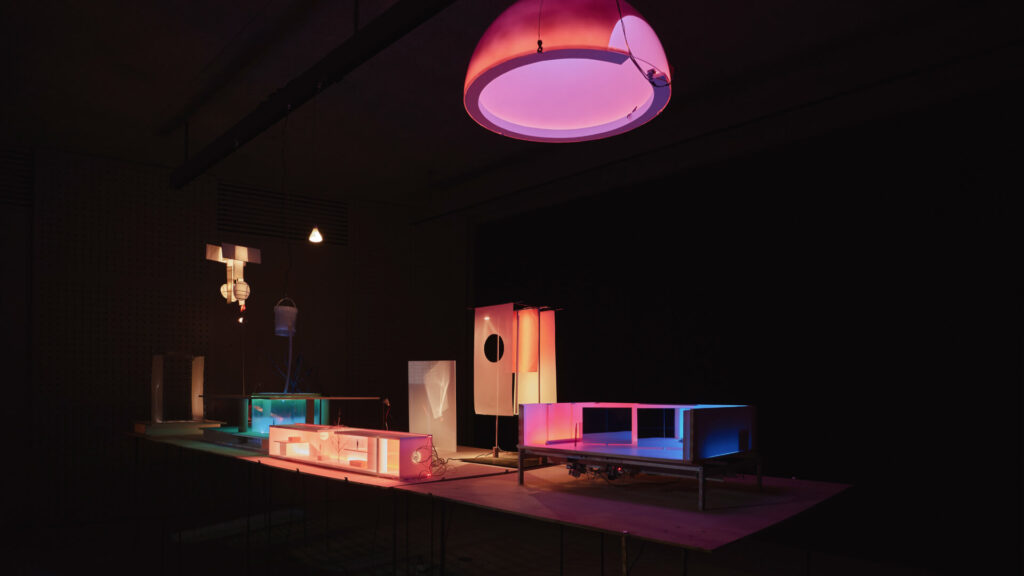
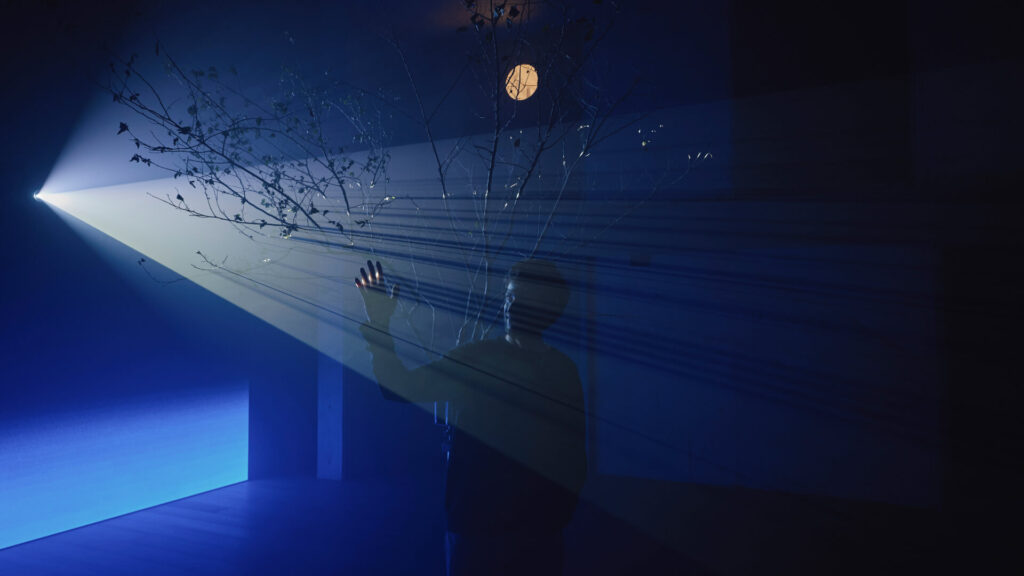
We organized a multi-layered exhibition: the light installations on the ground floor, the lamps in the center, and at the top a space dedicated to the way and space I work in.
Recreating the studio was challenging because it’s large, chaotic, and full of objects; we solved this by combining videos, interviews, and a series of working models. The result was very evocative.


Did this experience have a special meaning for you?
Very much. For two years, I thought I’d like to do an exhibition in Tokyo; it’s a childhood dream. And then it really happened, almost magically. It’s as if many threads of my professional life have come together. Sometimes I think about the exhibition, and it seems like a dream.
When designing lamps or lighting systems, what are your priorities?
For me, the most important thing is not the object itself, but the light it generates. I look inside and out: what atmosphere, what climate does that object create? First, I think about the light, then the object. The object is a necessity to be resolved, the consequence.
Are there values you feel you carry forward in your work?
Beauty is fundamental. It’s a cultural value that can transform people: when you enter the Pantheon in Rome, you change; something inside us moves. I don’t want to compare my work to that, but I deeply believe in the role of beauty in everyday life. Then there’s sustainability, which for me means, above all, creating objects that last a long time: 50, 100 years. Durability is sustainability.
Is there a lamp, not designed by you, that has particularly inspired you?
There are many, but if I had to name a master, I’d say Achille Castiglioni. Not so much for the form, which I sometimes like a lot and other times less, but for his way of working with light. He explored luminous matter in a singular, poetic, and intelligent way. He’s a great inspiration.