

Discover our e-shop and access a digital catalogue of over 40.000 design products.
Go to shopSummer Days | Spend 480€ or more and still save 15% with the Coupon SUMDY15
Discover our e-shop and access a digital catalogue of over 40.000 design products.
Go to shop10 April 2026

Mohd in conversation with Paolo Lomazzi. A dialogue on design as gesture, on freedom in living, and on the contemporary meaning of re-edition.
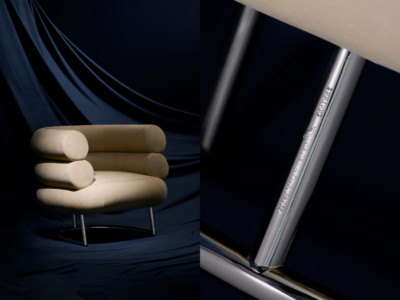
There are objects that do not age. They move through time, shifting contexts and audiences, yet remain relevant because they already contain a vision capable of anticipating ways of living. Ciuingam belongs to this category. Designed in 1966 by De Pas, D’Urbino and Lomazzi, it emerged in a moment when design was no longer limited to shaping forms, but began to question and redefine behaviours.
Interview conducted in Italian – English translation and editorial adaptation.

More than an armchair, Ciuingam operates as a device that acts upon the body and space. “An approach to design capable of influencing ways of living, behaviours and social relationships is always relevant,” notes Paolo Lomazzi. In this sense, the project extends beyond its formal dimension, becoming a cultural tool that reshapes postures, rituals and everyday interactions.
Its nature is deeply aligned with the social transformations of the 1960s.
It is not an ironic response to traditional furniture, but rather a gesture that intercepts change as it happens. “It was born alongside changes in society and custom, a popular gesture,” Lomazzi explains. Its strength lies in this immediacy: a direct, accessible form that translates a new way of inhabiting domestic space into matter.


At the core of this shift is the role of technology. The introduction of new materials, such as polyurethane foams, made previously unthinkable forms possible, freeing design from established typologies. “New materials and technologies revolutionised production processes and formal language. It could be done.” Ciuingam’s form emerges precisely from this condition, not as a stylistic exercise, but as the concrete outcome of a newly available possibility.


This leads to a different relationship with the object. The seat does not impose a posture; it suggests one, leaving space for a more spontaneous use. “A free and informal lifestyle,” Lomazzi summarises. The body settles, shifts, experiments. Domestic space loses rigidity and opens up to a more fluid dimension, where furniture no longer dictates behaviour, but accompanies it.
Reissuing a project like Ciuingam today means engaging with a profoundly changed design culture, as well as with a renewed sensitivity towards authenticity. In this process, fidelity is not limited to form alone. “They should not be judged as objects, but as lived environments.” What must be preserved is the object’s ability to generate experience, to build relationships and atmospheres, maintaining its original intent intact.


The re-edition by Mohdern follows this direction, highlighting material culture and Italian craftsmanship, with a rigorous focus on proportions, finishes, and overall execution quality.
The armchair will be presented in preview during Milan Design Week 2026, starting from April 21, at the Mohd showroom on Via Filippo Turati 3.
Today, Ciuingam lends itself to multiple interpretations. It is not bound to a specific context, but retains an open vocation. “The goal is always a responsible and inclusive attention to people.” Whether placed in a domestic interior, a public setting or a more experimental environment, what matters is the quality of the relationship it is able to generate.
In this sense, its relevance does not lie in nostalgia, but in its capacity to continue posing a fundamental question: not what a seat should be, but how we want to live.