

Discover our e-shop and access a digital catalogue of over 40.000 design products.
Go to shopSpring Days | Use the coupon code SPRING15 to get 15% off on purchases starting at 480€ and SPRING20 to get 20% off on purchases starting at 4800€
Discover our e-shop and access a digital catalogue of over 40.000 design products.
Go to shop24 February 2026

Sara Moroni’s approach to light and her Feel and Iconica collections for Penta explore the balance between emotion, material, and architectural precision.
Sara Moroni is a designer who has successfully combined her training in architecture and interior design with a unique sensibility for light. Her approach is not limited to product design, but encompasses the entire lighting experience, imagined and calibrated to enhance spaces and the objects that inhabit them.
Among her best-known projects are the Feel and Iconica collections for the Penta, where simplicity, versatility, and attention to materials combine to create products capable of arousing emotion and wonder, transforming light into a fundamental element in the narrative of space.
Interview conducted in Italian – English translation and editorial adaptation.
How has your training influenced the way you design lamps today?
The technical and scientific skills acquired at university, combined with the humanistic and artistic inspiration I developed during high school and a strong personal passion, have helped define my personality and my professional profile in a multifaceted way. My education at the Polytechnic allowed me to internalize a structured and multidisciplinary design method, as well as develop a strategic and critical approach to design that I continue to cultivate. Being both a product designer and a lighting designer, with a strong interest in architecture, I approach each project from a cross-disciplinary perspective. I aim to bring products to market that are unique in style and function.
Looking back at your professional career, was there a moment—a project, an intuition, or even a mistake—that made you realize that light would become the center of your work?
I realized this already during my training, but there was a store project that really opened my eyes. I had created a wall with highly textured, three-dimensional coverings, and I noticed that, depending on how I directed the light, the effect changed completely, enhancing the product in ways I hadn’t previously imagined. It was then that I realized: if this is what I love to do, I can’t ignore light; otherwise, I risk ruining everything else. From there, I discovered a world that perfectly complemented my passions: architecture, interiors, and products. Light became a fundamental element in completing a project in my way of working. I understood that light is a strategic lever: it can enhance what you’ve created or compromise it. That’s why it’s essential to consider it.
Connecting to this, but thinking about the domestic context: when you imagine one of your lamps lit in a home, what scene or emotion would you like to accompany that image?
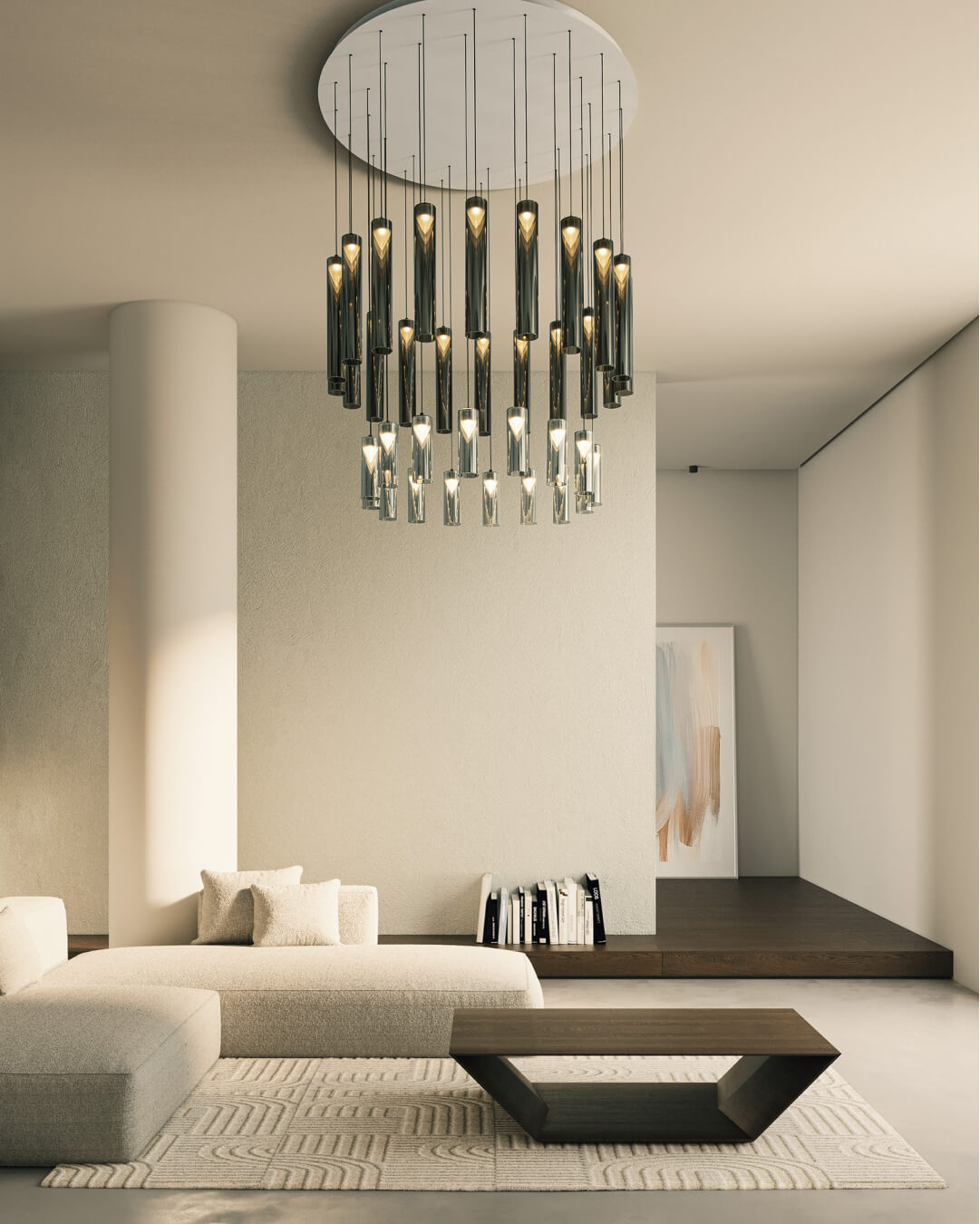
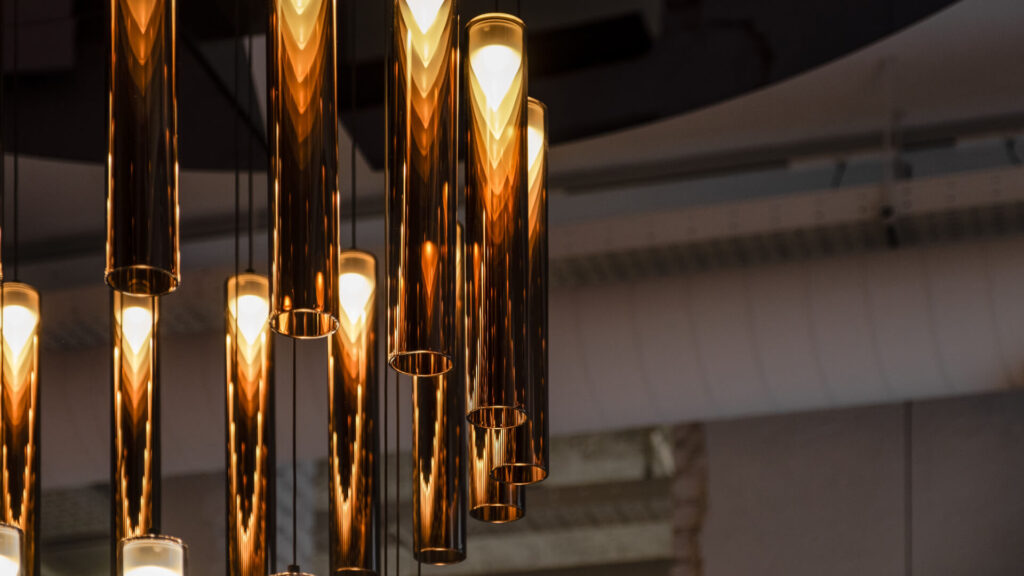
In my opinion, the use of materials has a huge impact on the final, emotional effect a space can convey. Take the Iconica project for Penta, for example: I designed a glass product with a very simple, almost minimalist design—a cylinder. Despite this apparent simplicity, the goal is to elicit a small smile or a sense of amazement in the user. It’s a discreet and “anonymous” presence, yet when the light is turned on, something unexpected happens: a virtual image is generated that completely transforms the perception of the product, creating a surprising luminous atmosphere. The combination of material, shape, and light thus allows for aesthetic simplicity and emotional impact, offering an experience that goes beyond the object’s functionality.
So, can amazement be part of the user experience?
Absolutely. I like to introduce something new: it could be aesthetic amazement, or a mechanism that makes the object more versatile or functional. I worked on the optics, the position of the light source, and the internal shape, creating a product that’s easy to assemble yet capable of generating a surprising effect. For me, every project is an opportunity to find a new and personal interpretation.
When you begin a new project, what are the priorities that guide your choices: function, atmosphere, technique, or the relationship with space?
Functionality and technique remain essential elements, but designing a lighting product means considering light as a true construction material: an element capable of defining space, interacting with materials, and significantly influencing people’s perception and well-being. I carefully evaluate the quantity, quality, and distribution of light, simultaneously imagining the physical product within the architectural space and its possible uses to ensure the product has functional, aesthetic, and emotional significance.
When designing a lamp, how important is the balance between the quality of light and the object’s form for you? And how do these two aspects interact in your work?
In my work, it’s essential to find a good balance between the quality of light and the object’s form. The product’s aesthetic is also determined by its interaction with light; functionality and technology must constantly interact with aesthetics.
Collaborating with a brand always involves a dialogue. What was it like working with Penta, and how did the company’s identity influence the project?
As a designer, I am called upon to offer a personal, original, and innovative contribution while always respecting the company’s identity. From this perspective, dialogue and teamwork are essential elements of the design process. Creating a product for Penta means paying particular attention to detail and the choice of materials, enhancing artisanal expertise through the use of contemporary languages.
Can you tell us about the concepts for the Feel and Iconica collections?
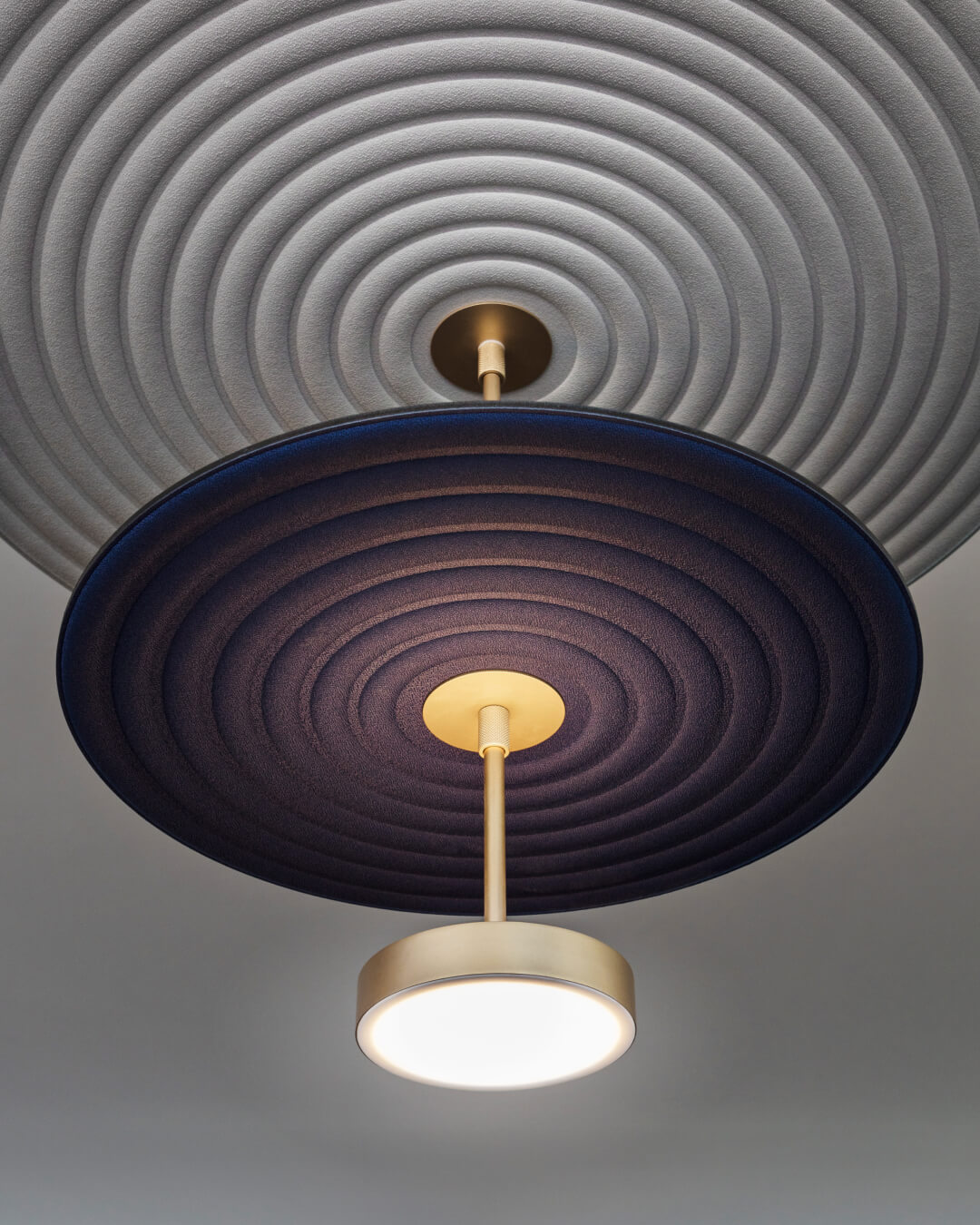
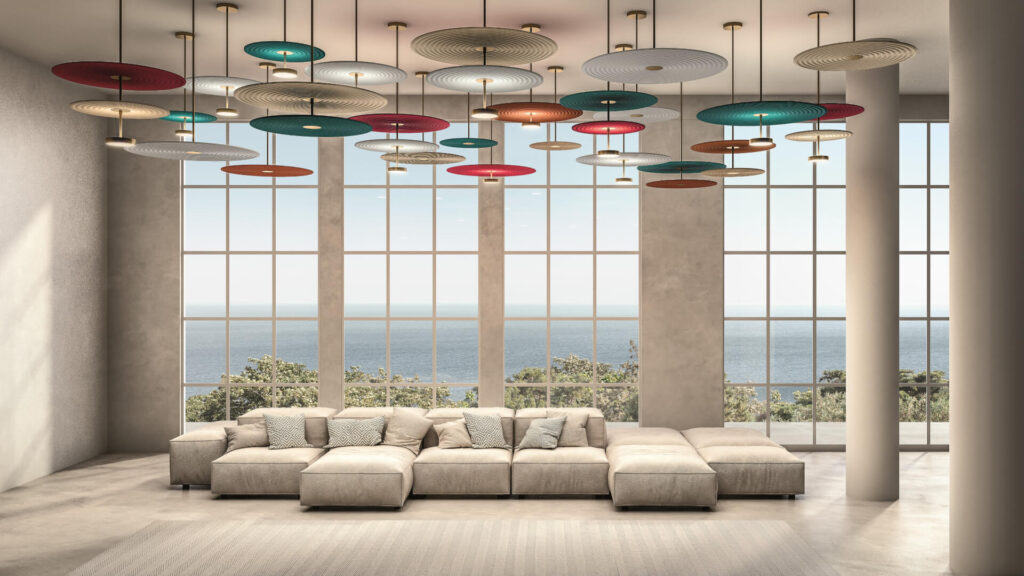
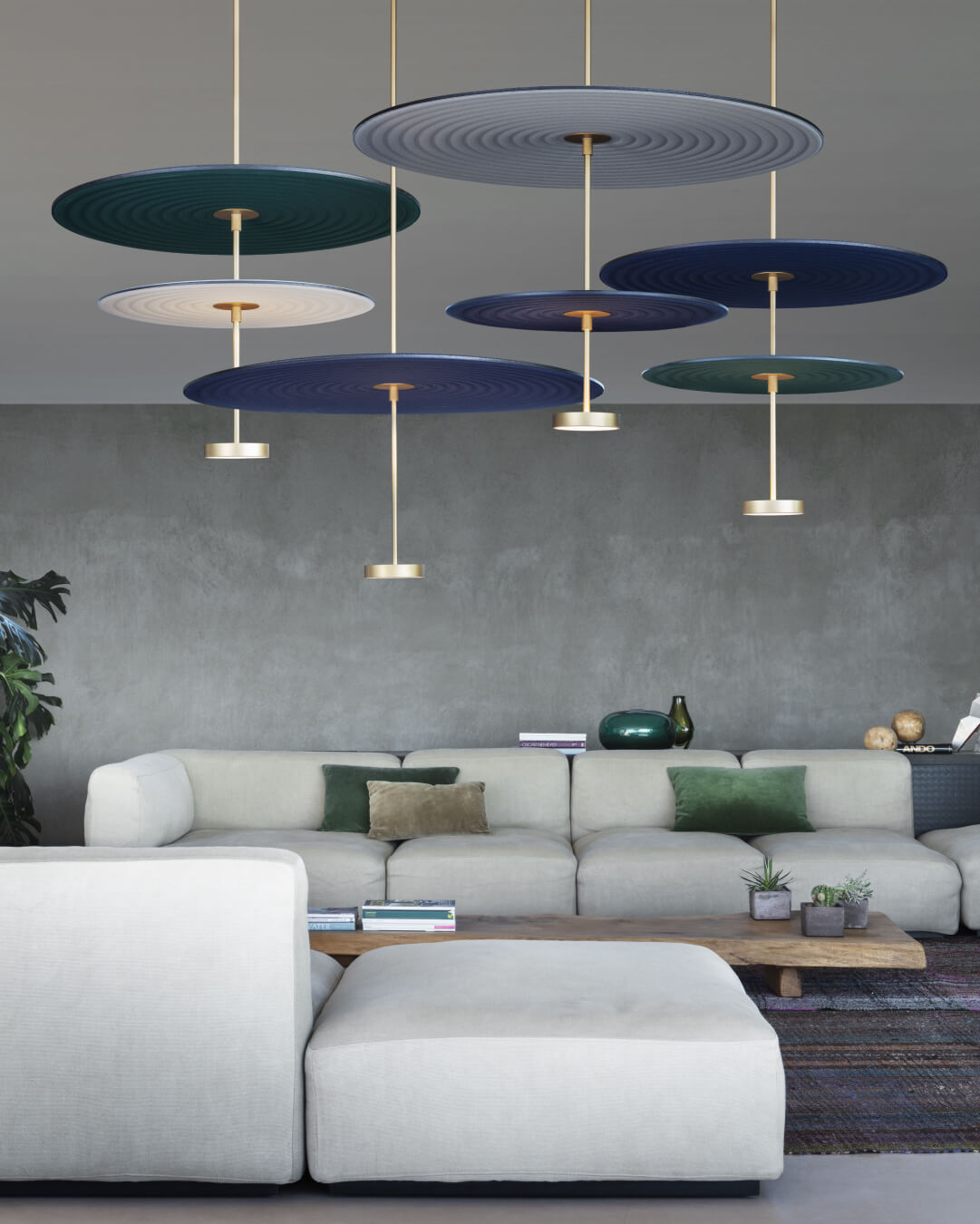
The projects stem from very different concepts. The Feel concept stems from a reflection on the relationship between light and sound in built spaces. The system is designed to improve the environmental qualities of architecture by combining tools for acoustic correction and lighting. The design approach is original: a modular system that integrates sound-absorbing disks in colored fabric with light sources. The product responds to technical needs with a decorative language of high aesthetic impact. The Iconica concept, on the other hand, stems from a corporate need: to offer the market a decorative, versatile, and compact product. I focused on the interaction between light and material to create a collection with a strong aesthetic impact, capable of arousing surprise and interest in the observer. Glass proved to be the ideal material to achieve the desired effect: an optical illusion that is noticeable when the product is turned on.
Looking to the future of home lighting, what themes do you consider central today for those who design lighting: sustainability, technology, well-being, or a new idea of living?
I believe it is necessary to consider and ponder all of the issues mentioned. Times will be increasingly complex, and a multidisciplinary approach increasingly urgent. The planet, technology, architecture, and individual habits are rapidly evolving. Companies and designers are called upon to observe, understand, and act responsibly.