

Discover our e-shop and access a digital catalogue of over 40.000 design products.
Go to shopFrom Inspiration to installation. Discover Mohd Interior Design Studio
Discover our e-shop and access a digital catalogue of over 40.000 design products.
Go to shop2 October 2026

Between new releases, reissues and updates, Home Stories for Winter 2026 revolves around a single idea: comfort as an understanding between body and structure.
With Home Stories for Winter 2026, Vitra presents a selection of new releases, archive reissues and updates in which the body is the true point of reference. Many of this year’s projects begin with a precise question: how should a domestic object behave when the person using it moves, changes position, sinks into it or springs back into action?
In seating, the answer lies in movement. Comfort stops being a form to be endured and becomes something that happens between the structure and the person who inhabits it, an understanding built gesture by gesture.
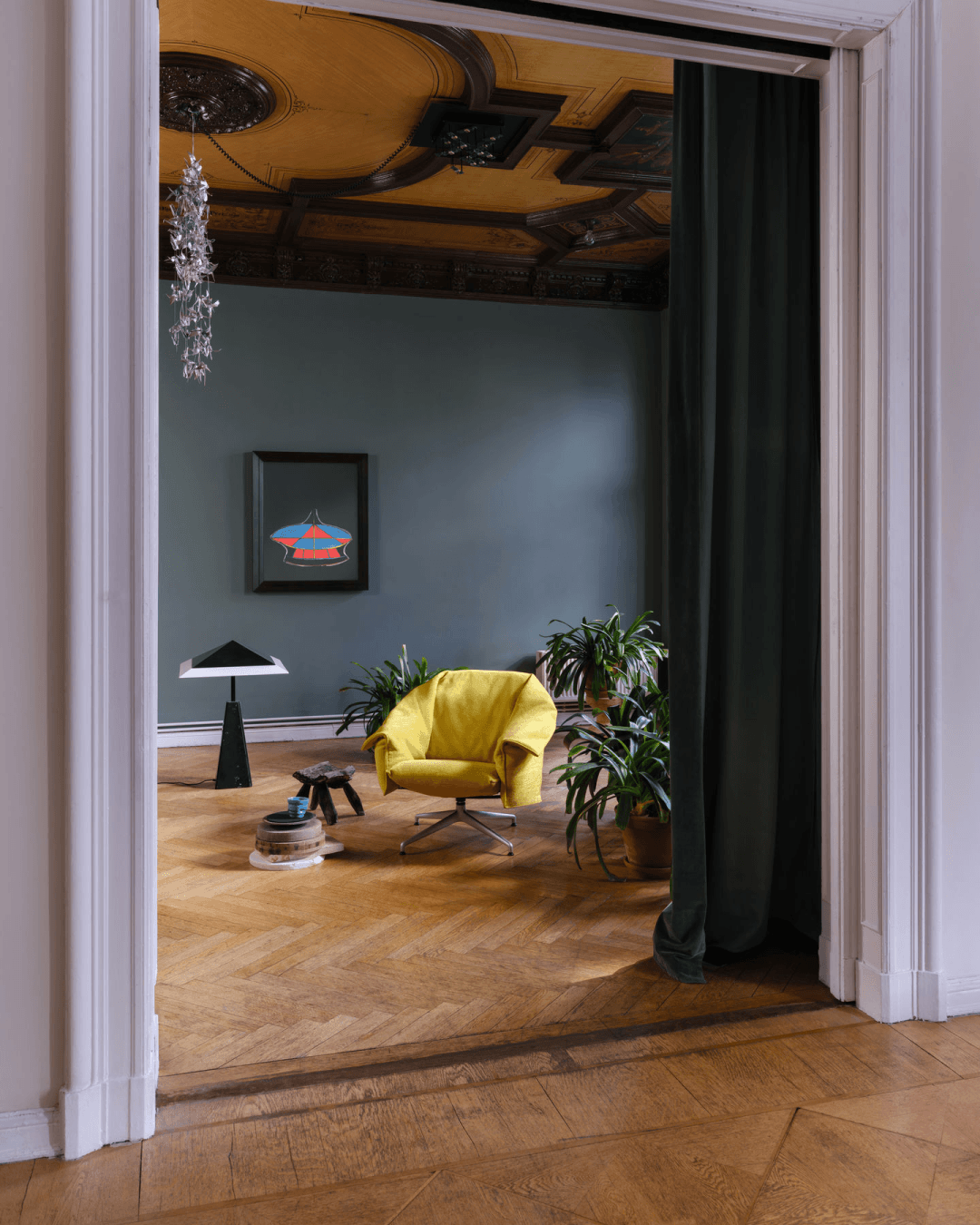
Movement is the theme of Bascule, the armchair by Studio Œ, the Berlin duo of Anne-Sophie Oberkrome and Lisa Ertel, who have collaborated with Vitra since 2025. The name is a French word and alludes to a mechanism hidden beneath the padding and upholstery, which adjusts itself to the sitter’s weight and accompanies the body from an upright position to a deep, almost horizontal recline. The most interesting detail, however, is the cover: roomy, and conceived like a jacket that dresses the frame. The two designers borrowed tailoring techniques from fashion, originally developed for garments that are easy to wear and do not restrict movement. The fabric may form folds and slight rippling, the natural marks of soft padding. In the two-tone version, two shades set the inside of the back apart from the outside, and the family comprises Highback, Lowback, Ottoman and Bench.
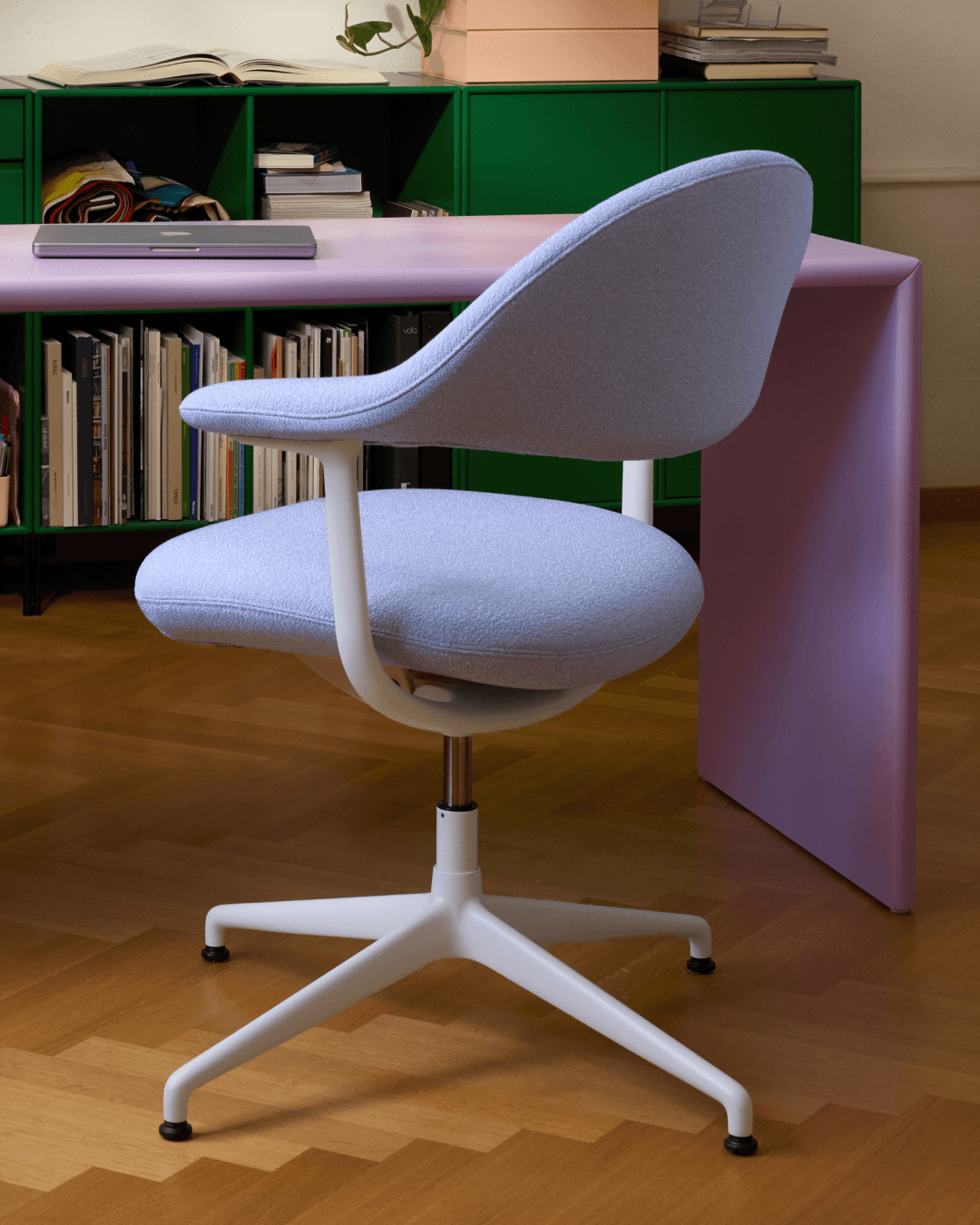
The movement continues in Mynt Soft by Erwan Bouroullec, who in 2026 brings the patented mechanism of the Mynt family into the world of lounge seating. Hidden beneath the seat, it is activated by the sitter’s weight and tilts the seat forward or back, while the seat moves independently of the backrest and the resistance adapts to the person sitting. On a swivel base with adjustable height, the armchair shifts from a low, relaxed position to one suited to a dining or work table. Bouroullec’s intention, in his words, was for the object to work but also to be inviting, for any person, task and moment. The same logic runs through Mynt High, the counter-height version, and through the new Mikado family by Edward Barber and Jay Osgerby, where in the Low and High versions a slightly reclining back follows the sitter.
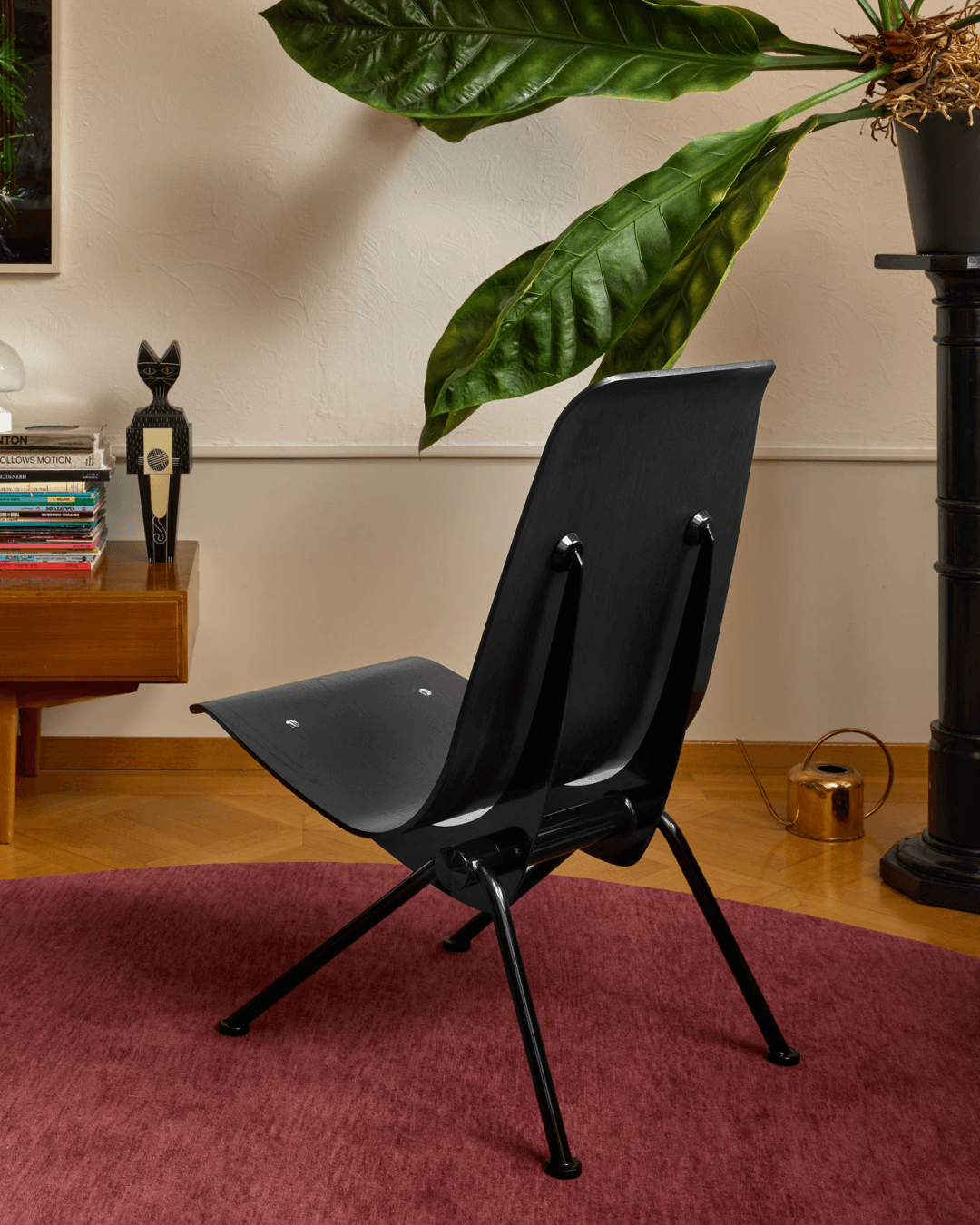
Where Bascule and Mynt Soft explore the softness of gesture, Antony offers structure as a counterpoint. Jean Prouvé, who always considered himself an engineer, designed it for the Cité Universitaire in Antony, near Paris: after the competition to furnish 150 rooms, then the largest student residence in Europe, the Ateliers Jean Prouvé began production.
The metal frame is an exercise in structural logic: a tubular crossbar stabilises the legs and two sheet-metal brackets support the plywood shell. It was the first chair to enter the collection of the Vitra Design Museum, where the original model arrived from Paris in 1984, brought by Rolf Fehlbaum. The 2026 limited edition, with a numbered label, finishes it in black: shell in lacquered European chestnut and frame in deep black. The crisp graphic quality of the black is softened by the grain of the wood, which lends warmth to a design of almost engineering rigour.
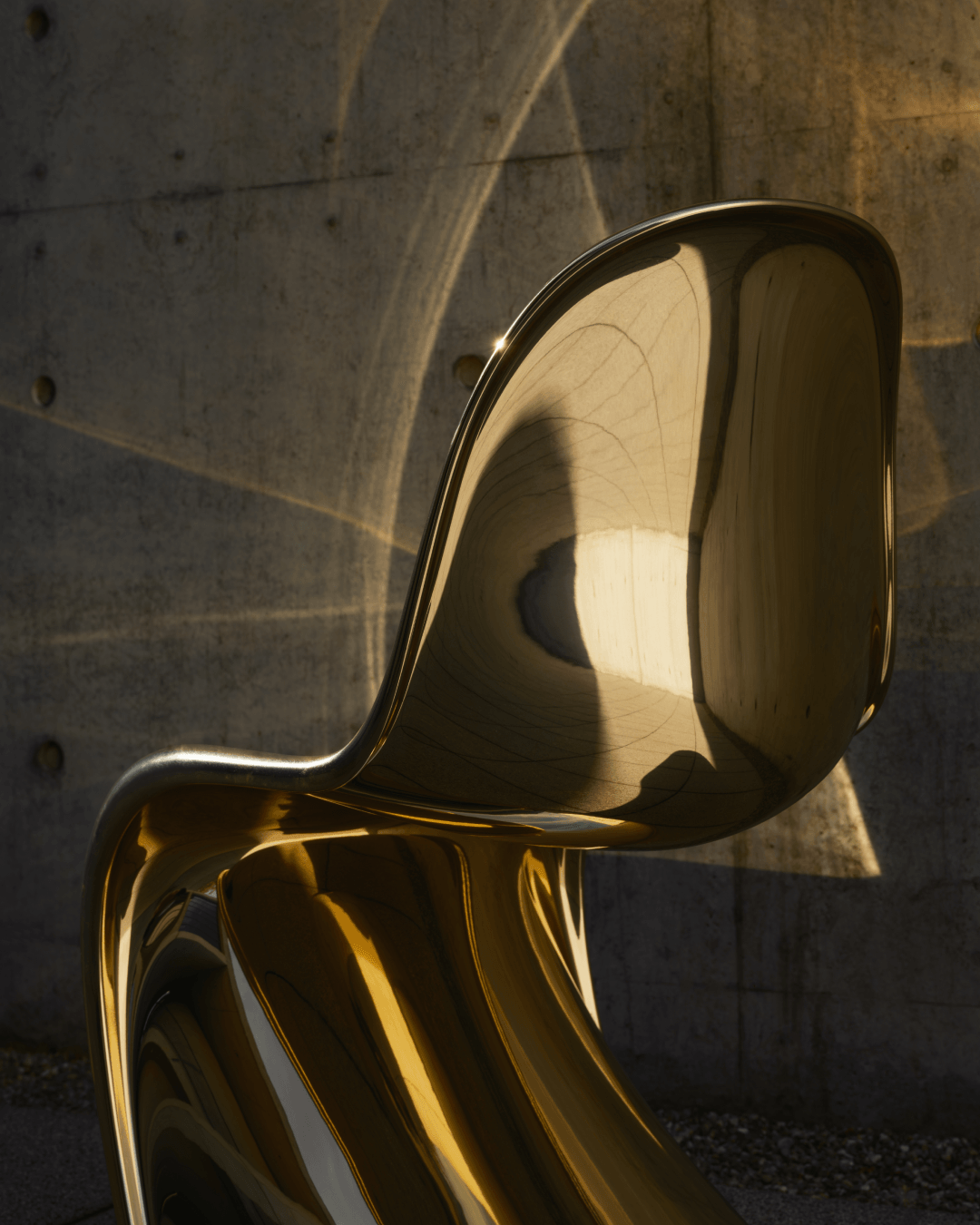
The Panton Chair, too, began with a precise goal: Verner Panton wanted a chair in a single piece, comfortable and usable anywhere. It was the first self-supporting chair in solid plastic, made from a single material. It went into production in 1967 and was presented to the public in Cologne in 1968. Panton was fascinated by mirrored surfaces throughout his career and as early as the 1970s imagined a reflective version, convinced that his dynamic curves were suited to a finish of this kind, but the delicacy of the coating, prone to scratches, prevented it. Today the finish is achieved through metallisation, with metal particles distributed across several layers of paint. The system withstands the slight movement of a chair that supports itself and makes the finish less prone to scratching. Its tone is a warm, pale gold. Production is limited to 999 pieces.

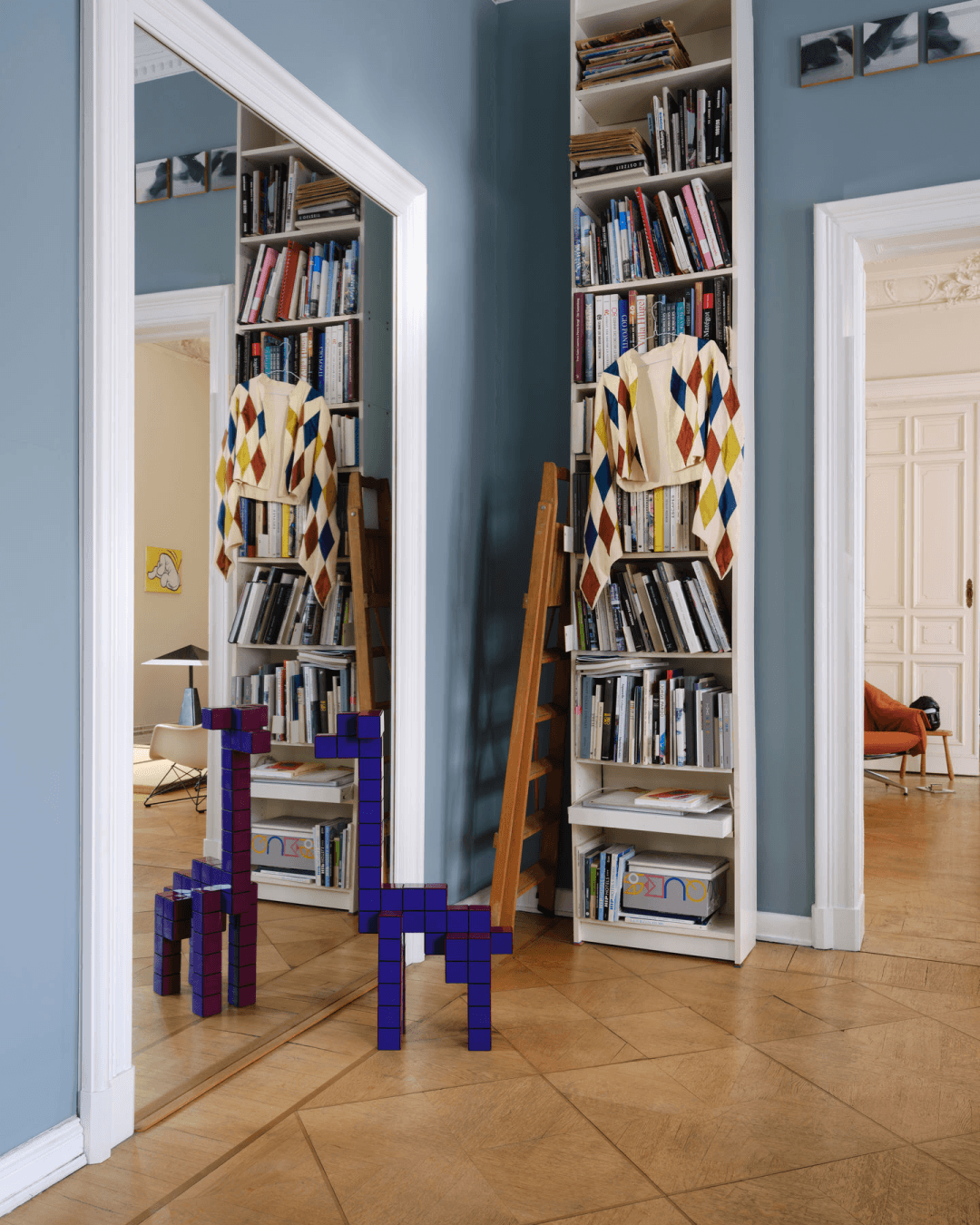
With Panton Cubes, finally, the story turns to construction. Conceived in 1974, the system is modular: square frames assemble into cubes, joined by clips and completed by coloured or chromed panels that form patterns and volumes. The reissue, developed with Verner Panton Design AG, offers kits for a duck, a flamingo, a giraffe and a cat, in duo-tone or chrome combinations, made from recycled post-industrial ABS. But imagination, as Vitra reminds us, has no limits.
Related articles