

Discover our e-shop and access a digital catalogue of over 40.000 design products.
Go to shopFrom Inspiration to installation. Discover Mohd Interior Design Studio
Discover our e-shop and access a digital catalogue of over 40.000 design products.
Go to shop25 September 2026

From clear blown glass to a mirrored surface: Lodes’ mastery of vacuum metallisation breathes new life into the Random collection, designed by Chia-Ying Lee.
One chapter of Mastery — the series through which Lodes tells the story of its technical expertise — is devoted entirely to vacuum metallisation, the process that turns blown glass into a mirrored surface. It’s a fitting place to begin when talking about Random Stick — the linear take on the Random collection, designed by Chia-Ying Lee in 2024 — because it reveals something that isn’t obvious at first glance: the colour of a sphere, which might look like little more than a styling choice, is in fact the result of exacting engineering and painstaking quality control.

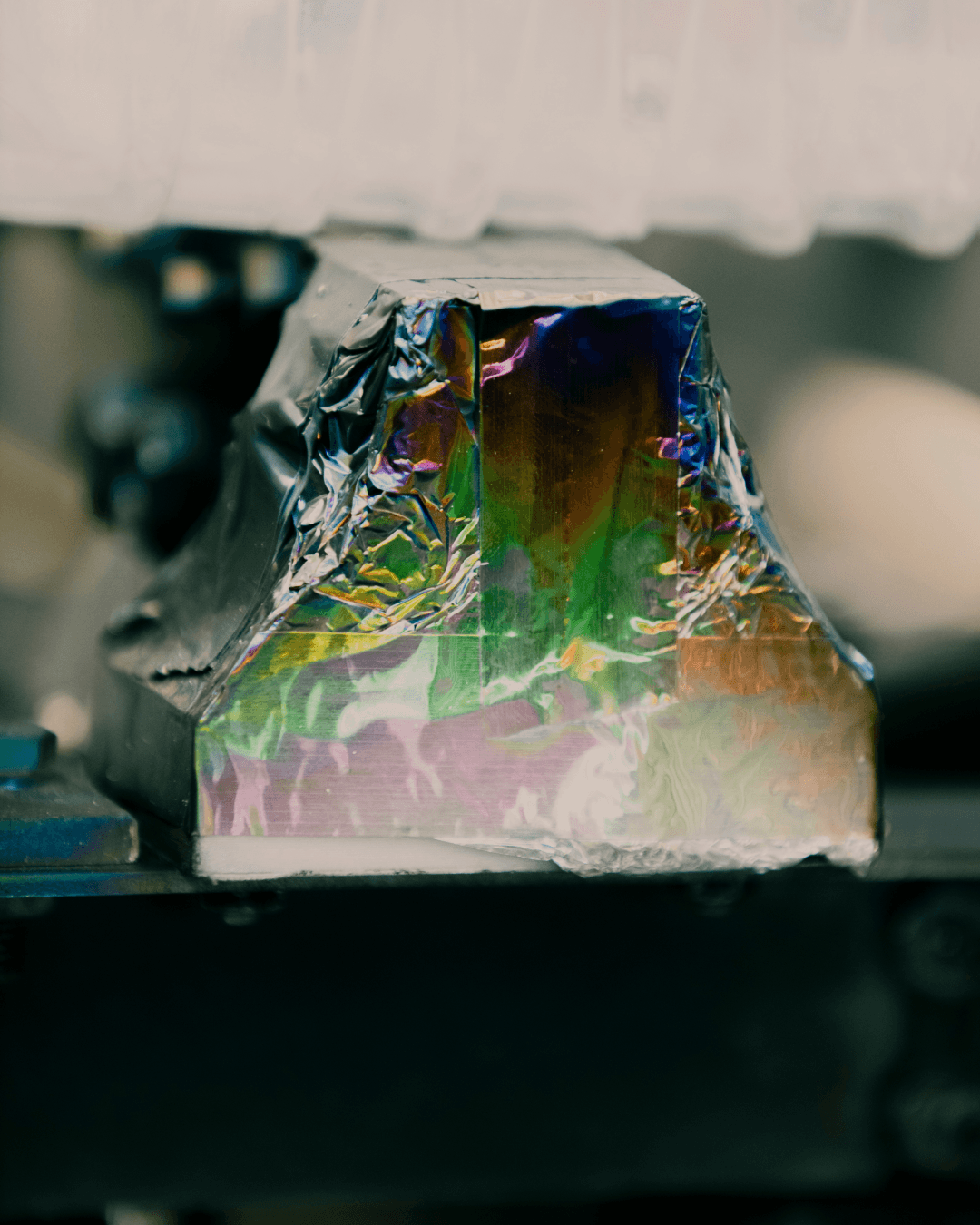
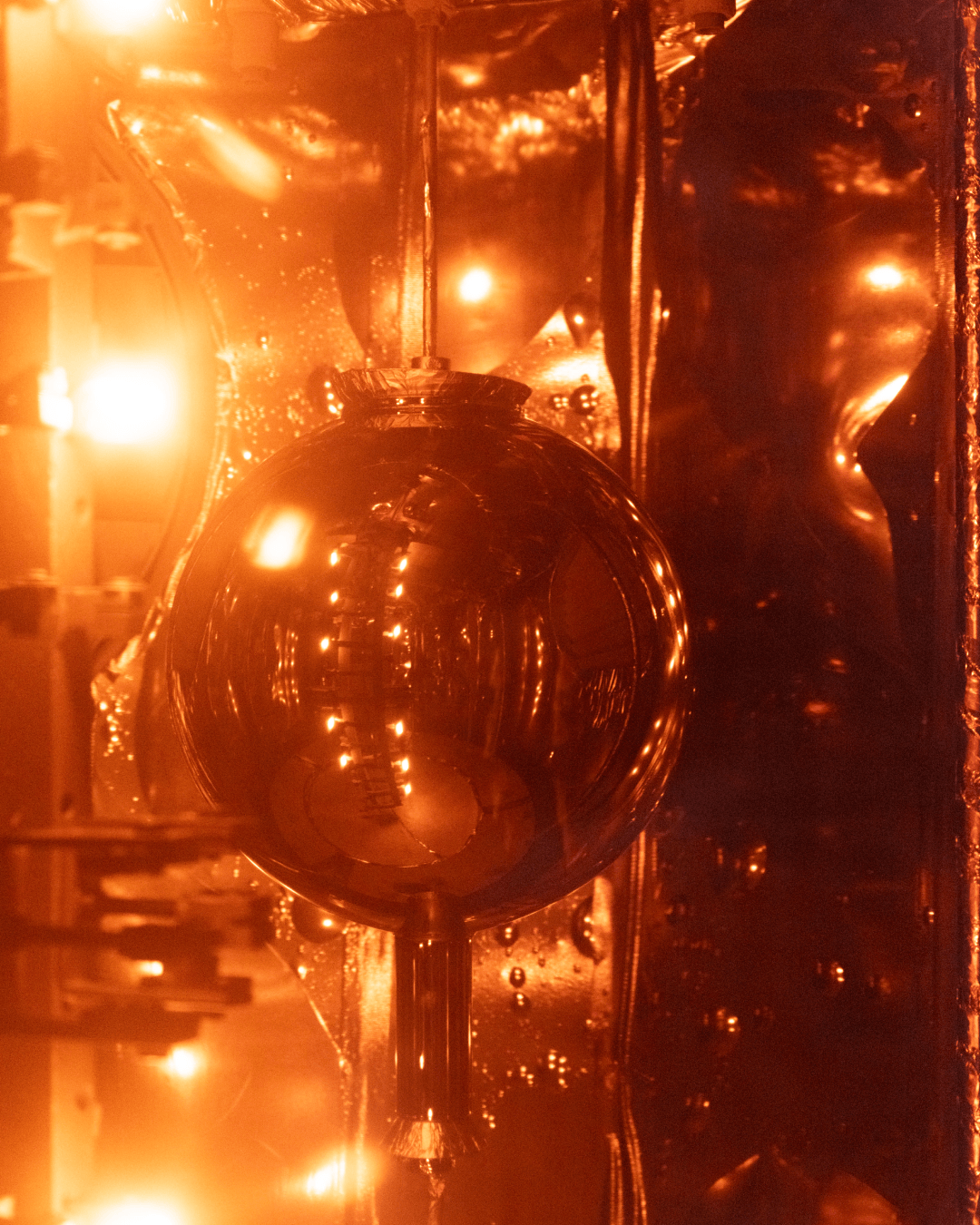
Known as the Vacuum Metallisation Process, this step takes place inside a sealed chamber from which the air is drawn out until almost none remains. In that silent vacuum, metal stops being solid: it heats up until it turns to vapour, then settles over the glass like an imperceptible veil. Rather than a spectacle staged to impress, it is an anatomy of gesture and industrial precision — the invisible instant in which transparency becomes reflection.

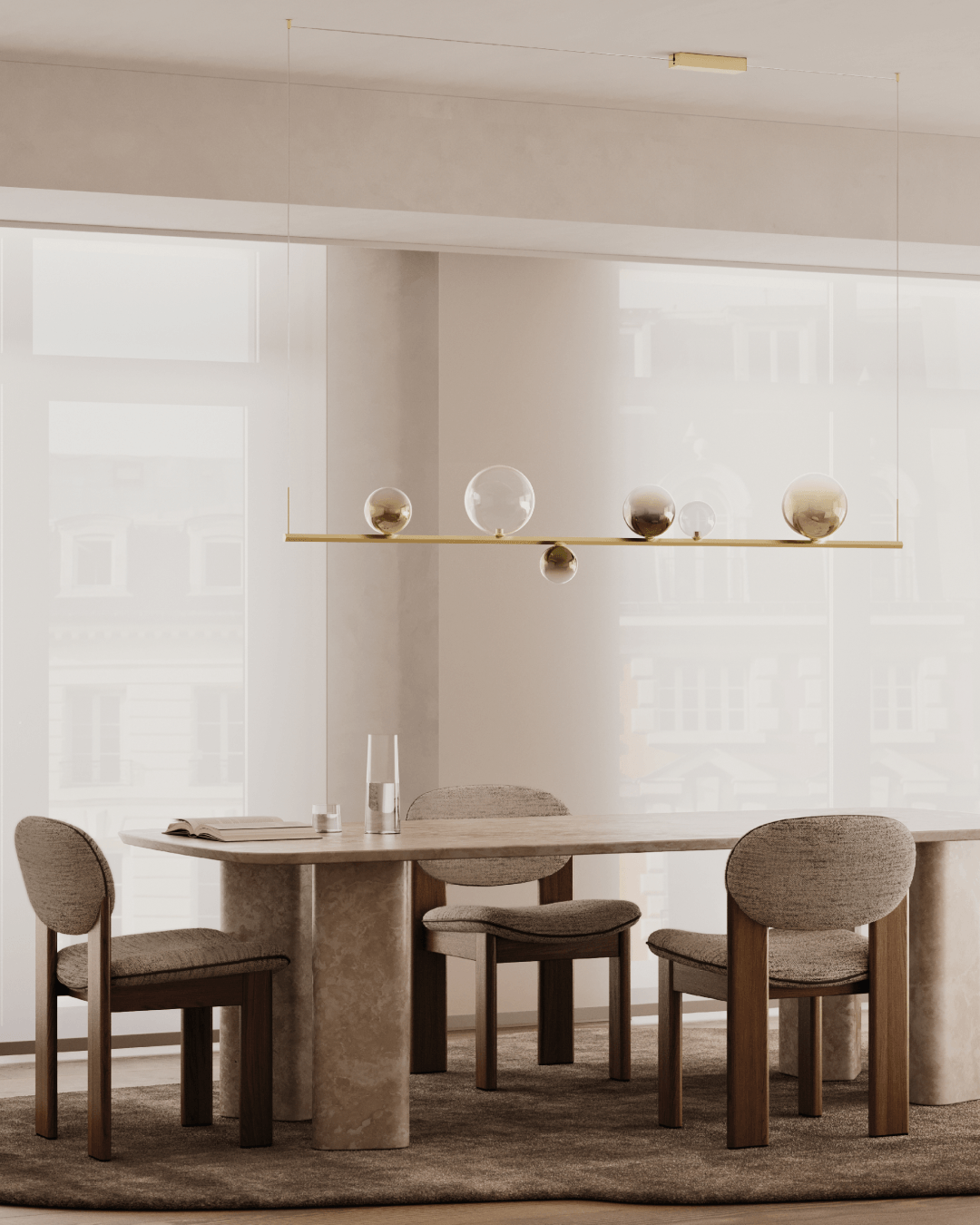
If Random began with the idea of a soap bubble suspended a moment before it bursts, Random Stick draws out that same breath along a hexagonal metal bar, turning the original cluster into a horizontal sequence designed to run above dining tables and bar or restaurant counters. Available in lengths from one hundred to one hundred and eighty centimetres, Random Stick lets its spheres multiply as the bar extends, building a rhythm that — despite what the collection’s name suggests — is never left to chance.
Before the vacuum can do its work, each sphere is fixed by hand onto a metal rod, its neck wrapped in protective tape that seals the opening and provides a grip: a small, hands-on gesture that precedes entry into the sealed chamber. Inside, small crucibles hold fragments of metal, waiting to be vaporised and deposited as an extremely thin film across the glass.

This step adds a second paradox to the one the collection already carried. Vacuum metallisation goes further than Random’s original premise: where Random had captured the fleeting instant of a soap bubble in a stable material, this process turns an object designed to let light pass through into a surface that sends light back. The transparent sphere, once no more than a vessel for its own light source, becomes a convex mirror, giving back a distorted image of the space around it — the room, the person looking at it, even the light that switches it on.
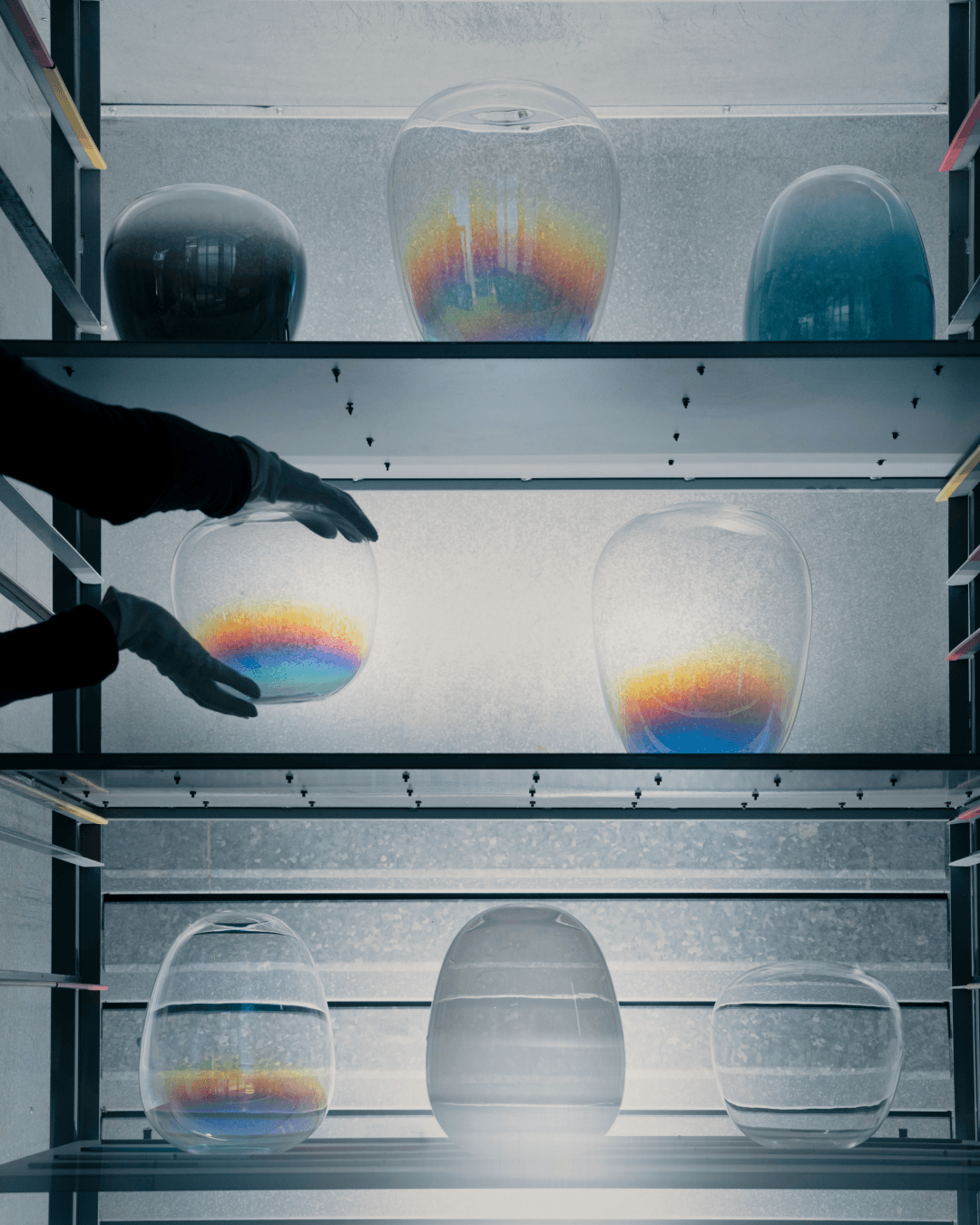
The new finishes developed for the spheres — Pale Gold, Mandarin Orange, Golden Sage and Deep Azure Steel, joining established tones such as Glossy Bronze — follow the same material logic: not colour laid over a surface, but metal layers that change the relationship between glass and light. Lodes has always tied its colour palette to its territory — to the architecture of Venice, to the art of glass-blowing, to the tesserae of mosaics. Vacuum metallisation is now one of the tools that extends that palette to mirrored surfaces, alongside its solid and transparent tones, and these can be paired freely with the bar in Polished Gold or Black Chrome.
Even at the very end, once the cycle inside the chamber is complete, there is still room for the human hand and eye: an operator examines the freshly metallised sphere up close, under calibrated light. Nearby, on a shelf, sample pieces sit lined up in a gradient of tones, from clear glass to the most saturated colours — most likely a reference for colour accuracy. For all its industrial rigour, in other words, the process hasn’t entirely let go of direct, hands-on control.
Along the hexagonal bar, the result is a sequence of spheres alternating transparency and reflection, direct light and light sent back: a measured balance between the source and its metallic echo, held in counterpoint, designed to run the length of a table or counter without ever reading as a simple row of lights. LEDs built into the underside of the bar complete the effect with even downward illumination, set in dialogue with the softer, diffused light of the spheres.
Coming back to the sealed chamber we began with, it becomes clear what Lodes means by Mastery: not the staging of a technique, but its disappearance into the finished object. Catching your own distorted reflection in the golden curve of a Random Stick sphere, you’re looking at the outcome of a process almost no one will ever actually see — a vacuum, metal turning to vapour, a gesture repeated thousands of times until it becomes invisible. It’s there, in that absence of spectacle, that the brand’s technical expertise truly shows.
Related articles